Budget around-the-world route under $1,500
Under $1,500 around the world is a practical travel strategy when flights are booked with flexible dates, long connections, and a lightweight luggage plan. This route uses a mix of low-cost carriers and independently purchased segments, not a single alliance ticket .
The itinerary below proves the concept: seven paid segments, nine flying legs, and a total base fare of USD $1,495 . Each section includes a shareable map link and a downloadable CSV file for route planning.
This budget around-the-world itinerary under $1,500 shows how to stack cheap segments across four continents with practical low-cost planning.
This is not a luxury trip. It is a working example of how to make very long-haul travel affordable by choosing the cheapest legal fares available for each connection.
How to keep an around-the-world trip under $1,500
- Book separate tickets. Low-cost carriers rarely appear on alliance itineraries, so the cheapest path is usually several independent reservations.
- Use flexible dates. The biggest savings come from shifting your outbound or homeward day by a few days.
- Accept longer stopovers. A half-day in Calgary or an overnight in Chengdu is usually cheaper than a faster connection.
- Travel light. Carry-on only avoids expensive bags on low-cost and long-haul budget carriers.
- Compare multiple airports. Flying into a nearby hub and then taking a separate budget flight can cut the total fare significantly.
Summary itinerary
Trip at a glance
- 9 flying legs. All segments are designed for affordability.
- USD $1,495 base fare. This is the complete round-the-world budget target.
- Main carriers. WestJet, Vueling, Ryanair, Sichuan Airlines, AirAsia, Jetstar, Air Canada.
- Best for. flexible travelers who can book separate tickets and accept longer stopovers.
The complete route is:
Vancouver → Calgary → Barcelona → Berlin → Rome → Chengdu → Bangkok → Sydney → Honolulu → Vancouver
Total base fare: USD $1,495
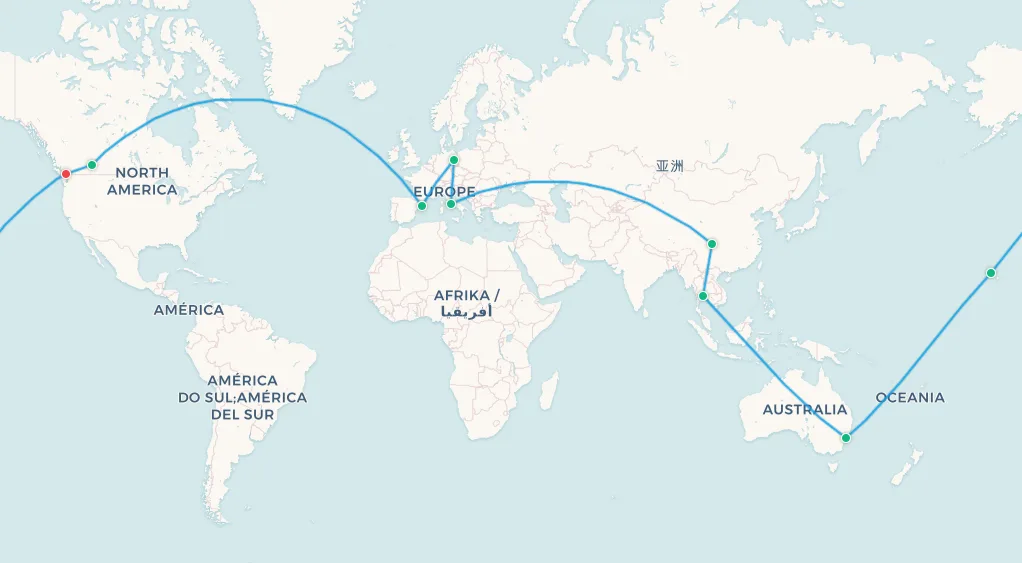
➕ Add these 9 routes to my map | 🗺️ View all routes on the map | 📥 CSV
1. Vancouver → Calgary → Barcelona
This first leg starts with a domestic Canadian feeder to a low-cost transatlantic departure city. WestJet sells the combined YVR–YYC–BCN itinerary cheaply because Calgary is used as the origin point for a transatlantic seat sale.
Cost: USD $316 (WestJet)
Why it works: the ticket is issued as a single itinerary across the Canada–Europe corridor, which keeps the price lower than booking each segment separately.
Barcelona is one of the cheapest European gateways from North America, which makes the first long-haul departure more affordable.
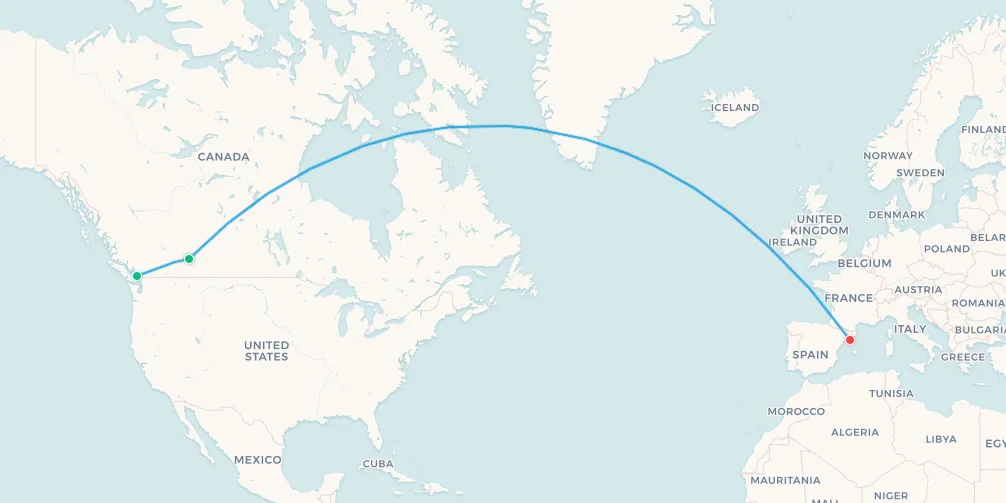
➕ Add these 2 routes to my map | 🗺️ View this route on the map | 📥 CSV
Search flights Vancouver → Barcelona Search flights YVR → BCN2. Barcelona → Berlin
Europe is one of the cheapest continents for point-to-point travel. Vueling and other ultra-low-cost carriers often sell one-way fares under $100 between major capitals.
Cost: USD $77 (Vueling)
Why it works: the paper-thin cost of intra-Europe connections makes it easy to keep overall itinerary cost very low.
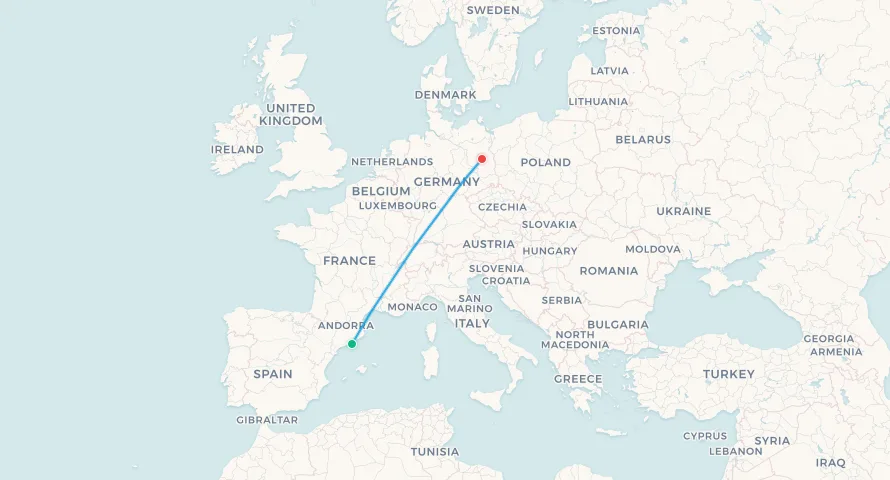
Barcelona and Berlin are both strong low-cost hubs that keep the Europe portion of this trip inexpensive.
➕ Add this route to my map | 🗺️ View this route on the map | 📥 CSV
Search flights Barcelona → Berlin Search flights BCN → BER3. Berlin → Rome
Another inexpensive intra-Europe hop, this one using Ryanair’s extensive German–Italy network. It is perfect for turning a low-cost city pair into a longer nonstop itinerary.
Cost: USD $98 (Ryanair)
Why it works: the European low-cost model is strongest on short-to-medium flights, and a night in Rome is a useful rest stop before the next long-haul segment.
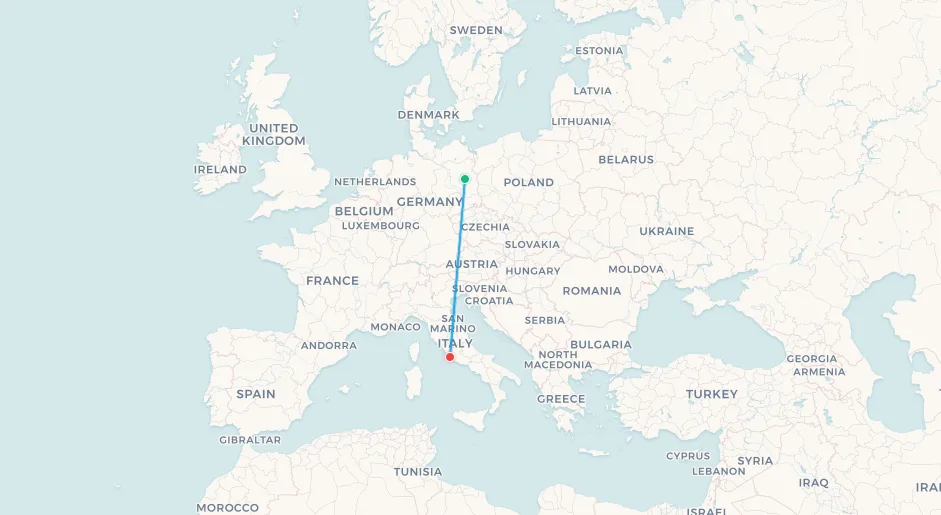
➕ Add this route to my map | 🗺️ View this route on the map | 📥 CSV
A short stay in Rome keeps the long-haul departure fresh while still staying inside Europe’s value market.
Search flights Berlin → Rome Search flights BER → FCO4. Rome → Chengdu → Bangkok
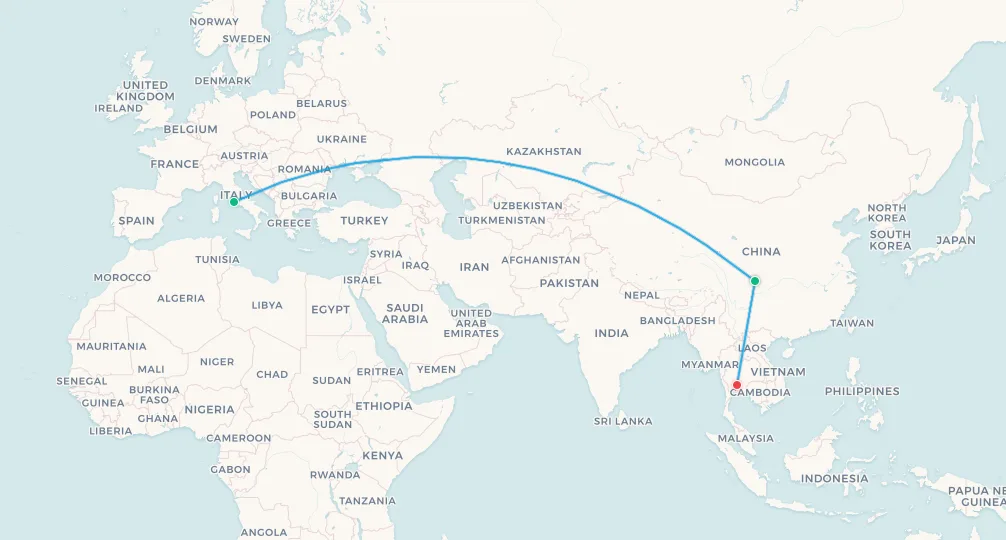
This is the longest single fare in the itinerary and the one that makes the entire trip affordable. Sichuan Airlines often publishes low fares from Europe to Southeast Asia via Chengdu, leveraging a western gateway into its Chinese network.
Cost: USD $387 (Sichuan Airlines)
Why it works: long-haul low-cost carriers tend to undercut legacy airlines when they carry traffic through lower-cost Chinese hubs.
➕ Add these 2 routes to my map | 🗺️ View this route on the map | 📥 CSV
Search flights Rome → Bangkok Search flights FCO → BKKChengdu acts as a low-cost gateway into Southeast Asia, and that is the budget advantage of this long-haul routing.
5. Bangkok → Sydney
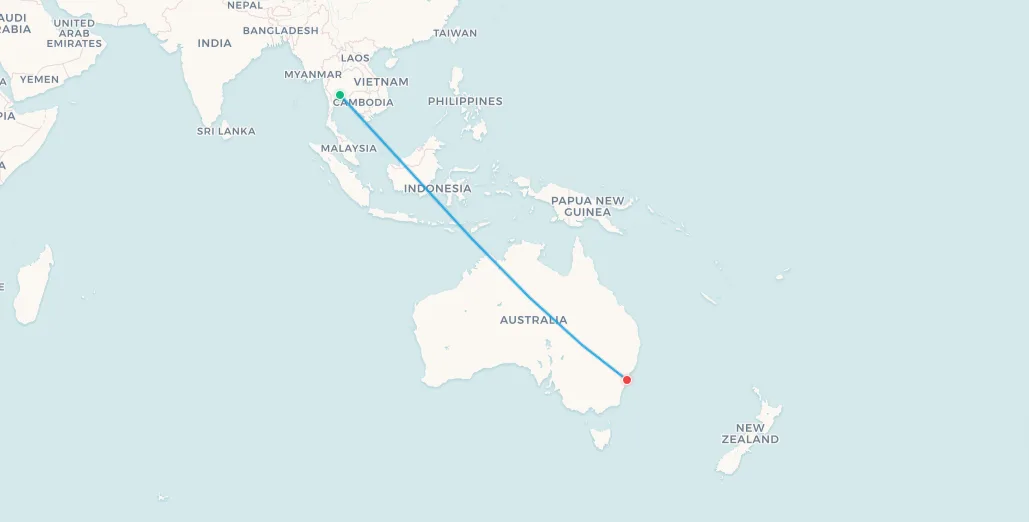
AirAsia is one of the most aggressive low-cost operators for long-haul Asia–Australia travel. The airline frequently offers sub-$200 one-way fares from Southeast Asia to Australia outside peak season.
Cost: USD $197 (AirAsia)
Why it works: building the Australia connection from Bangkok rather than from a European or North American hub keeps the price extremely low.
➕ Add this route to my map | 🗺️ View this route on the map | 📥 CSV
Search flights Bangkok → Sydney Search flights BKK → SYD6. Sydney → Honolulu
Bangkok is a strong departure point for Australia outside peak travel windows, which helps keep this leg under budget.
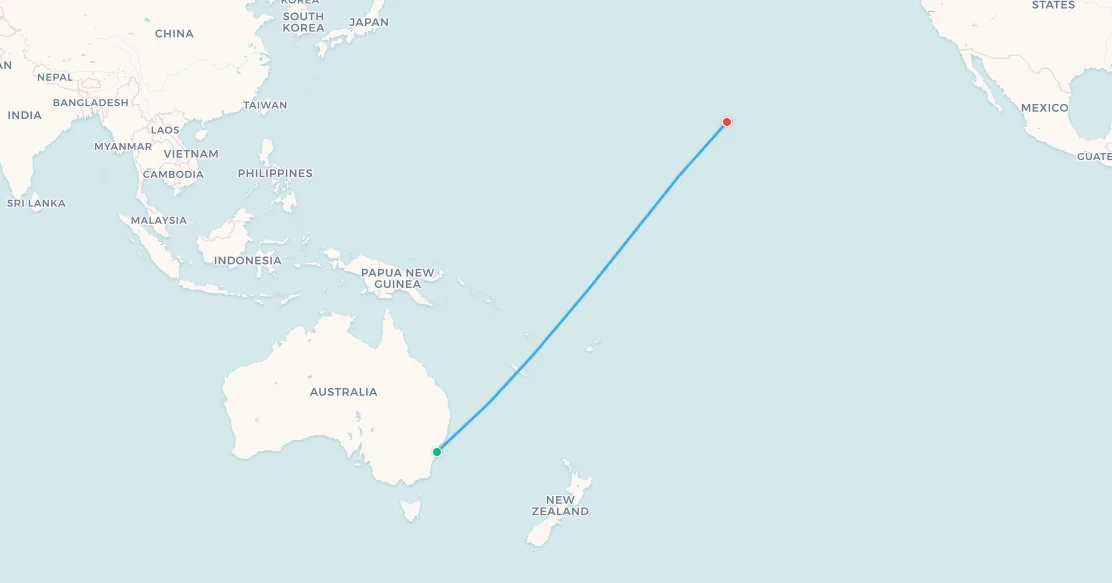
Jetstar is the budget carrier that makes the trans-Pacific edge of this itinerary viable. The airline keeps the Australia–Hawaii sector affordable enough to preserve the overall route budget.
Cost: USD $287 (Jetstar)
Why it works: combining a cheap Asia–Australia segment with a budget Pacific crossing minimizes the premium normally charged for Australia–USA travel.
➕ Add this route to my map | 🗺️ View this route on the map | 📥 CSV
Search flights Sydney → Honolulu Search flights SYD → HNL7. Honolulu → Vancouver
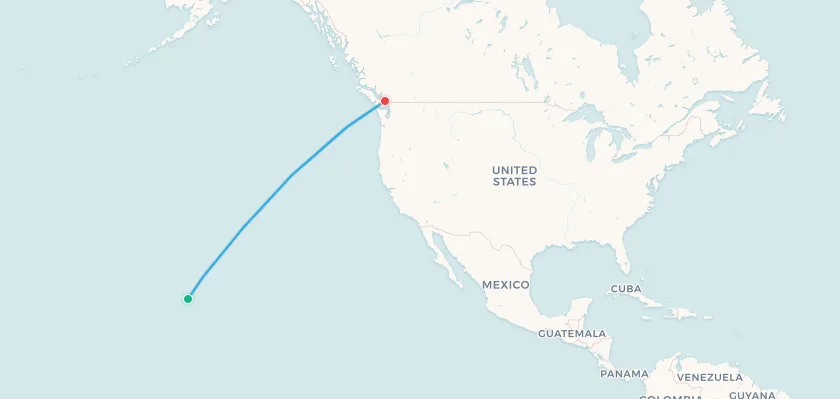
The final leg returns to the Canadian Pacific coast on a straightforward Air Canada connection. Honolulu–Vancouver is often cheaper than Honolulu–Los Angeles for the same Pacific crossing.
The Australia–Hawaii segment is one of the most price-sensitive parts of the route, and this connection makes it work affordably.
Cost: USD $133 (Air Canada)
Why it works: the US–Canada market is strongly competed, especially on routes servicing Hawaii travel, which keeps prices down.
➕ Add this route to my map | 🗺️ View this route on the map | 📥 CSV
Search flights Honolulu → Vancouver Search flights HNL → YVRRoute overview and planning notes
The complete powered route from Vancouver back to Vancouver is also available as a single downloadable itinerary. Use the overview map and downloadable itinerary above to compare the full path with your own planning tools.
Cost considerations
Ending in Vancouver instead of a U.S. city often saves money on the last Pacific crossing.
This total reflects base ticket prices only. Low-cost airlines often exclude checked baggage, seat selection, and meals. If checked bags are needed, add up to $400 extra across the full itinerary.
Independent tickets do not carry protection between airlines, so travel insurance covering missed connections is the safest way to protect the plan.
Why this strategy works
- Each connection is priced on its own strongest market rather than on one high-cost global ticket.
- Long stopovers let you buy the cheapest available departure day, not the fastest flight.
- Low-cost carriers in Europe, Asia and the Pacific are often cheaper than major airlines on the same routes.
- Starting and ending in North America lets the itinerary use Pacific and Atlantic corridors without a second ocean crossing.
How to adapt it
Swap any single leg for a nearby low-cost airport if it saves money. For example, flying into Milan or Venice instead of Rome can sometimes cut the Europe–China fare, while landing in Los Angeles rather than Vancouver may offer a slightly better return price to Honolulu.
When booking, keep each separate reservation on a different card and confirm the fare rules for changes or refunds before you pay.
FAQs for budget around-the-world routes
Can I book these flights on one ticket?
No. This itinerary relies on separate tickets and flexible routing to keep costs low, so plan each booking independently.
When should I book?
Search fares 4–12 weeks before travel and use adjacent date flexibility to find the cheapest combinations.
How do I protect separate tickets?
Purchase travel insurance that covers missed connections, avoid tight same-day transfers, and allow at least one overnight before the longest new segment.
Key takeaways
- Flexible dates and low-cost carriers can make an around-the-world route under $1,500 possible.
- Independent tickets require extra planning, but the savings can be dramatic.
- Route maps and CSV downloads help compare segment alternatives before booking.
- Always budget separately for checked bags, insurance, and possible flight disruption protection.
Track your flights
Keep this budget itinerary and its route maps in one place with My Flight Routes. Add these flights to compare connections, monitor your travel budget, and track how many times you fly each segment.