The Airbus A380: a flying icon still soaring
Twenty-one years after its first rollout on January 18, 2005, the Airbus A380 "Superjumbo" remains the pinnacle of commercial aviation scale. Despite production ending in 2021, this engineering marvel continues to capture imaginations and carry passengers across the globe. With 190 active A380s still operating in 2026, the world's largest passenger airliner proves that bigger can indeed be better.
This article is based on comprehensive data from Aerospace Global News, which provides detailed analysis of current A380 operators and their route networks. We encourage readers to visit their original article for the complete technical specifications and fleet details.
A marvel of engineering
The Airbus A380 was born from an ambitious vision in the 1990s when Airbus sought to create a very large aircraft capable of competing with Boeing's dominant 747. As air travel expanded rapidly and major hub airports like London Heathrow, Los Angeles, and Frankfurt approached capacity limits, Airbus believed that a high-capacity, long-range aircraft would be essential for the future.
The program, initially known as the A3XX, officially launched in 2000 with backing from European governments and major airlines. The result was a technological milestone: a full-length double-deck design featuring advanced fly-by-wire systems, extensive use of lightweight composite materials, and quieter, more fuel-efficient engines. Depending on configuration, the A380 can carry over 500 passengers in typical airline service and more than 800 in an all-economy layout.
According to Aerospace Global News, the first A380 made its maiden flight on April 27, 2005, from Toulouse, France. After extensive testing, it entered commercial service in October 2007 with Singapore Airlines on the Singapore to Sydney route, receiving overwhelmingly positive passenger reactions.
The top 10 airlines operating the A380 in 2026
Based on data compiled by Aerospace Global News, here are the airlines still flying the superjumbo and where you can experience it:
1. Emirates (116 aircraft) - The A380 kingdom
Active Aircraft: 100 flying, 16 parked awaiting service return
Configurations: From 484 seats (four-class) to 615 seats (two-class high-density)
Network: Over 40 destinations worldwide
As the world's largest international airline and the biggest A380 operator, Emirates has built its long-haul strategy around this aircraft. Their first A380 (A6-EDA) was delivered in July 2008, while the most recent (A6-EVS) arrived in December 2021. Emirates deploys its superjumbos to slot-constrained airports and high-demand routes, making them the undisputed champions of A380 operations.
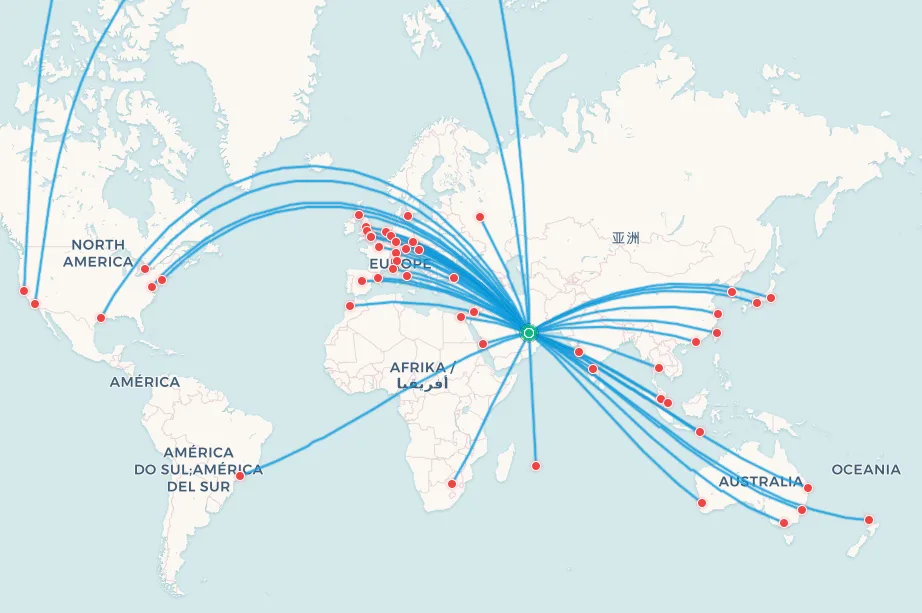
➕ Add these 51 routes to my map | 🗺️ View Emirates A380 network | 📥 CSV
2. Singapore Airlines (12 aircraft) - The pioneer
Configuration: 441 seats (12 First, 60 Business, 36 Premium Economy, 333 Economy)
Key Routes from Singapore (SIN):
- Auckland (AKL)
- Mumbai (BOM)
- Delhi (DEL)
- London Heathrow (LHR)
- Shanghai (PVG)
- Sydney (SYD)
Singapore Airlines holds the distinction of being the world's first A380 operator, taking delivery in October 2007. While 12 aircraft have been retired, the carrier still operates 12 examples on prestigious long-haul routes from Changi Airport.
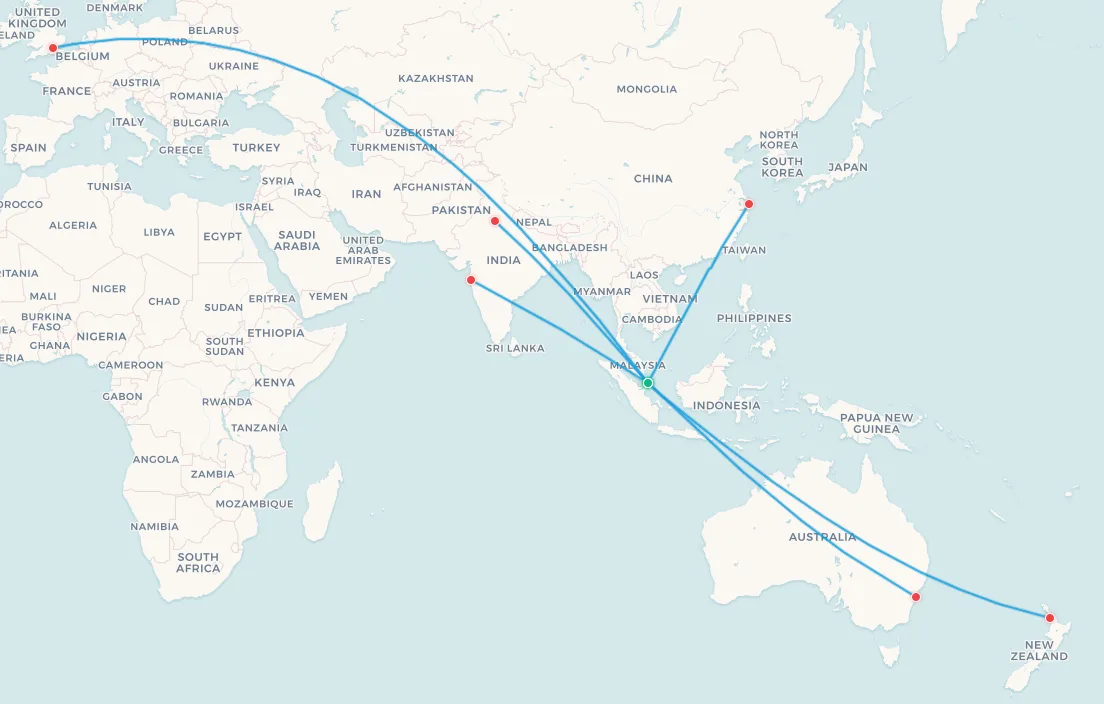
➕ Add these 6 routes to my map | 🗺️ View Singapore A380 network | 📥 CSV
3. British Airways (12 aircraft) - The UK flagship
Configuration: 469 seats (14 First, 97 Business, 55 Premium Economy, 303 Economy)
Routes from London Heathrow (LHR):
- San Francisco (SFO)
- Los Angeles (LAX)
- Miami (MIA)
- Johannesburg (JNB)
- Dubai (DXB)
British Airways took delivery of its first A380 in July 2013, with the carrier originally ordering 12 aircraft to supplement its widebody fleet as Heathrow faced severe slot constraints. After an uncertain period during the pandemic, all 12 aircraft are now back in active service on high-demand routes.
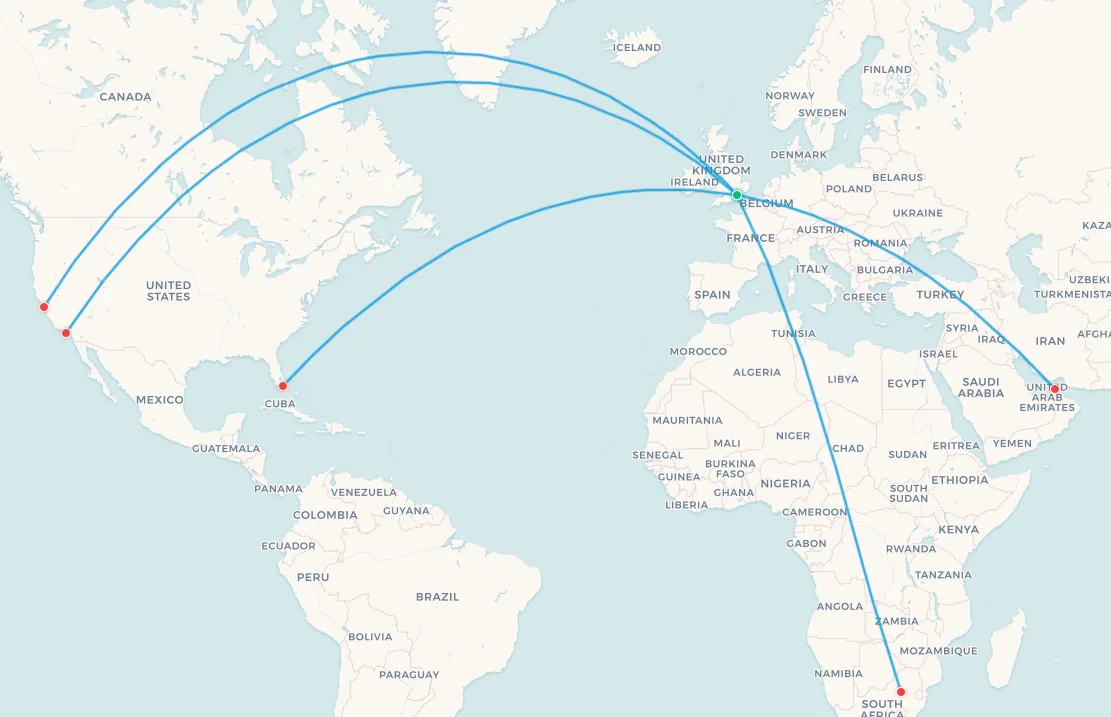
➕ Add these 5 routes to my map | 🗺️ View British Airways A380 network | 📥 CSV
4. Qantas (10 aircraft) - The Australian icon
Configuration: 485 seats (14 First, 70 Business, 60 Premium Economy, 341 Economy)
Routes from Sydney (SYD):
- London Heathrow (LHR)
- Singapore (SIN)
- Los Angeles (LAX)
- Dallas Fort Worth (DFW)
- Johannesburg (JNB)
Qantas originally received 12 A380s but now operates 10, with two used as parts sources. The fleet was stored at Victorville, California during the pandemic but returned to service starting in 2022. As reported by Aerospace Global News, the last aircraft to exit storage (VH-OQC) suffered wing and engine damage on its first passenger flight in December 2025 but returned to service in January 2026.
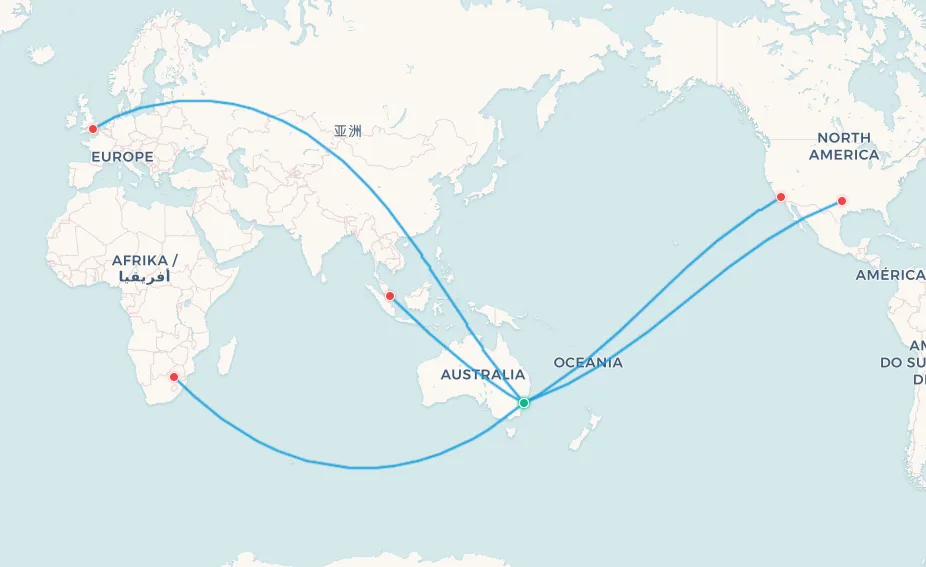
➕ Add these 5 routes to my map | 🗺️ View Qantas A380 network | 📥 CSV
5. Etihad (9 aircraft) - The desert phoenix
Routes from Abu Dhabi (AUH):
- London Heathrow (LHR)
- Paris Charles de Gaulle (CDG)
- Singapore (SIN)
- Toronto (YYZ)
- Tokyo (NRT) - Starting June 2026
Etihad originally had 10 aircraft and initially parked all of them during the pandemic. However, the sharp rebound in long-haul demand prompted a reassessment. The airline returned its first A380 to service in July 2023 between Abu Dhabi and London Heathrow. Eight of nine aircraft are now back in service, with the last (A6-APB) due to return in June 2026 for Tokyo operations.
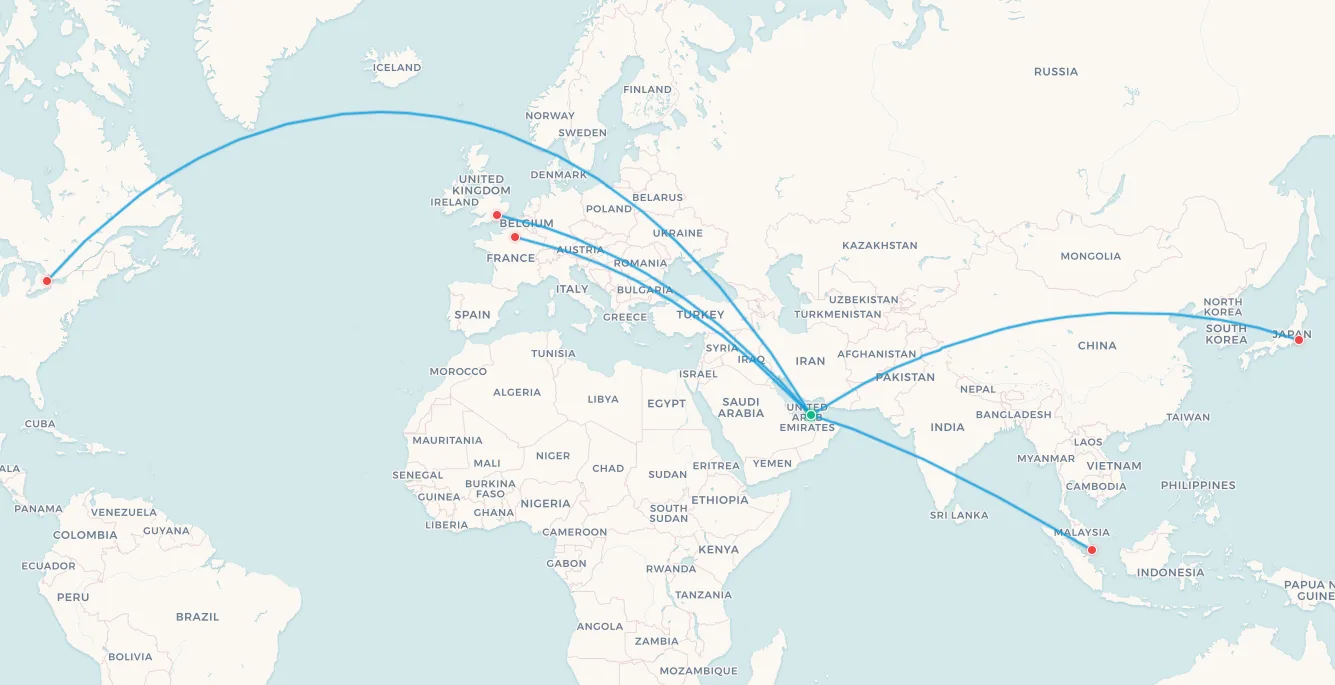
➕ Add these 5 routes to my map | 🗺️ View Etihad A380 network | 📥 CSV
6. Lufthansa (8 aircraft) - The German powerhouse
Configuration: 509 seats (8 First, 78 Business, 52 Premium Economy, 371 Economy)
Summer 2026 Routes from Munich (MUC):
- Los Angeles (LAX) - Daily
- Boston (BOS) - Daily
- Delhi (DEL) - Daily
- Denver (DEN) - Daily
- Washington D.C. (IAD) - Daily
- San Francisco (SFO) - 3x weekly
Lufthansa is the only other European carrier besides British Airways still flying the A380. The airline currently operates a limited network from Munich but plans to significantly ramp up A380 operations for summer 2026, targeting high-demand routes to the United States and India.
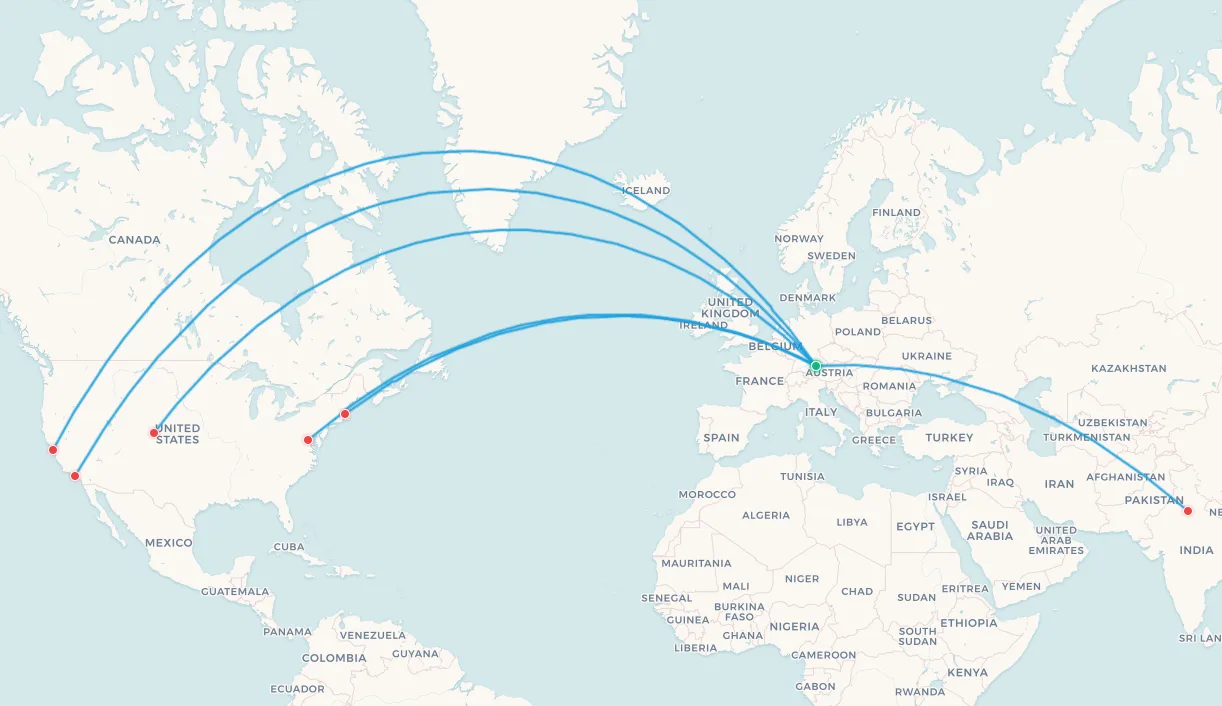
➕ Add these 6 routes to my map | 🗺️ View Lufthansa A380 network | 📥 CSV
7. Qatar Airways (8 aircraft) - The Doha connector
Configuration: 517 seats (8 First, 48 Business, 461 Economy)
Routes from Doha (DOH):
- Bangkok (BKK)
- Sydney (SYD)
- Paris (CDG)
- London Heathrow (LHR)
- Singapore (SIN)
Qatar Airways operates eight A380s after scrapping two from its original fleet. The airline's oldest aircraft is 12 years old, delivered in December 2014, while its newest is almost eight years old. The carrier uses the superjumbo on a limited but strategic network of high-demand routes from Doha.
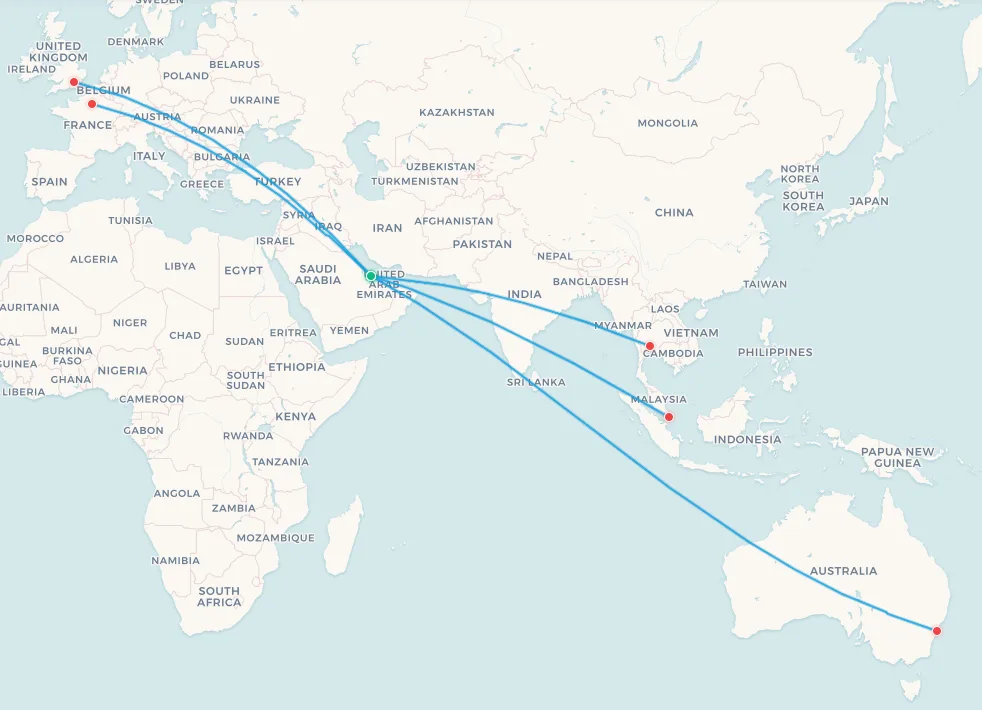
➕ Add these 5 routes to my map | 🗺️ View Qatar A380 network | 📥 CSV
8. Korean Air (6 aircraft) - The Seoul gateway
Configuration: 407 seats (12 First, 94 Business, 301 Economy)
Routes from Seoul-Incheon (ICN):
- New York JFK (JFK)
- Los Angeles (LAX)
- Tokyo Narita (NRT)
Korean Air maintains six A380s from its original order of ten. Five are currently active, with one parked at Seoul-Incheon Airport. The carrier operates the superjumbo on key trans-Pacific routes and to Tokyo, providing passengers with a premium experience on these heavily-traveled routes.
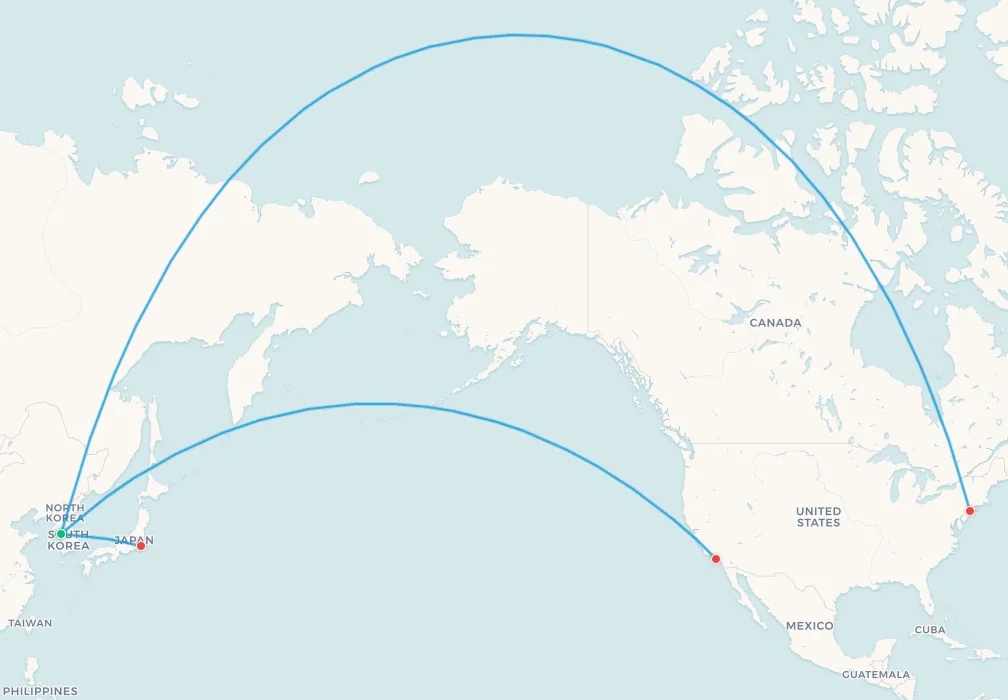
➕ Add these 3 routes to my map | 🗺️ View Korean Air A380 network | 📥 CSV
9. Asiana (6 aircraft) - The Korean alternative
Configuration: 495 seats (12 First, 66 Business, 417 Economy)
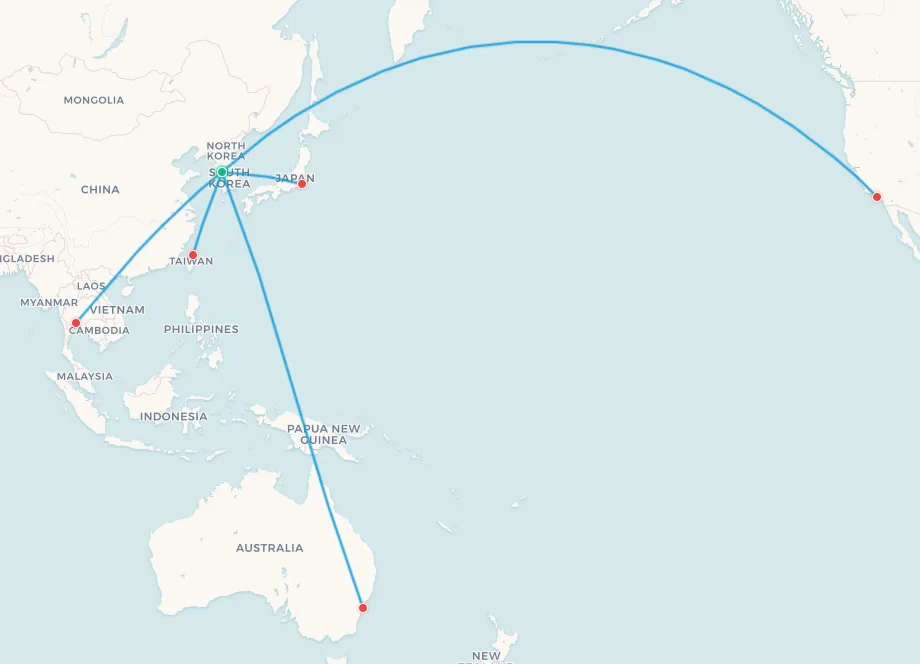
Routes from Seoul-Incheon (ICN):
- Bangkok (BKK)
- Los Angeles (LAX)
- Tokyo Narita (NRT)
- Sydney (SYD)
- Taipei (TPE)
Now a sister airline to Korean Air, Asiana operates six A380s with a wider network than its partner. The carrier's oldest aircraft is 12.1 years old, while its youngest is 9.4 years old, providing passengers across Asia and to the United States with the superjumbo experience.
➕ Add these 5 routes to my map | 🗺️ View Asiana A380 network | 📥 CSV
10. All Nippon Airways - ANA (3 aircraft) - The flying turtles
Configuration: 520 seats (8 First, 56 Business, 73 Premium Economy, 383 Economy)
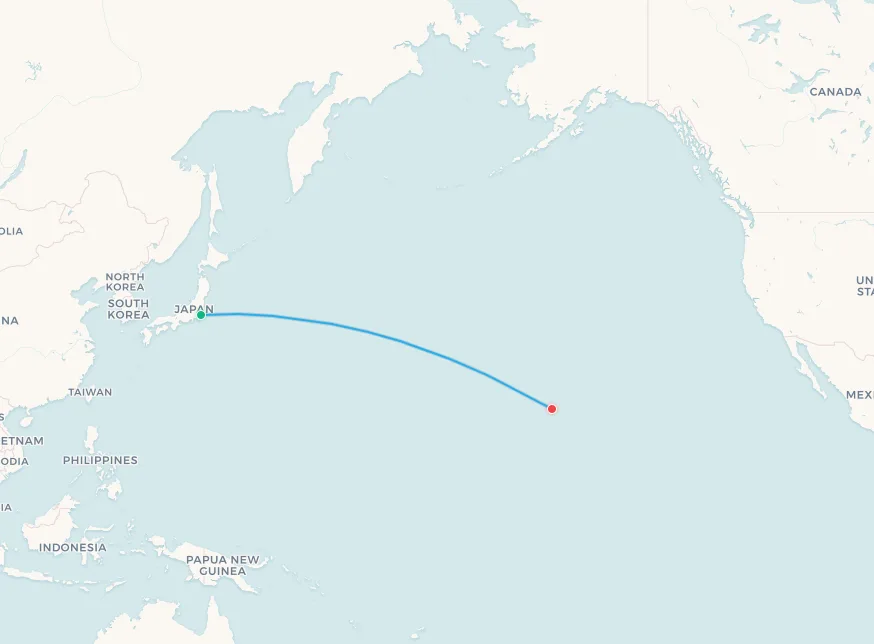
Exclusive Route: Tokyo Narita (NRT) to Honolulu (HNL)
All Nippon Airways maintains the smallest A380 fleet with just three aircraft, exclusively serving the Tokyo-Honolulu route popular with Japanese tourists. What makes ANA's A380s unique is their special "Flying Honu" (flying turtle) liveries: JA381A "Lani" features a blue turtle, JA382A "Kai" sports a green turtle, and JA383A "Lā" displays an orange turtle. These distinctive designs make ANA's A380s instantly recognizable.
➕ Add this route to my map | 🗺️ View ANA A380 route | 📥 CSV
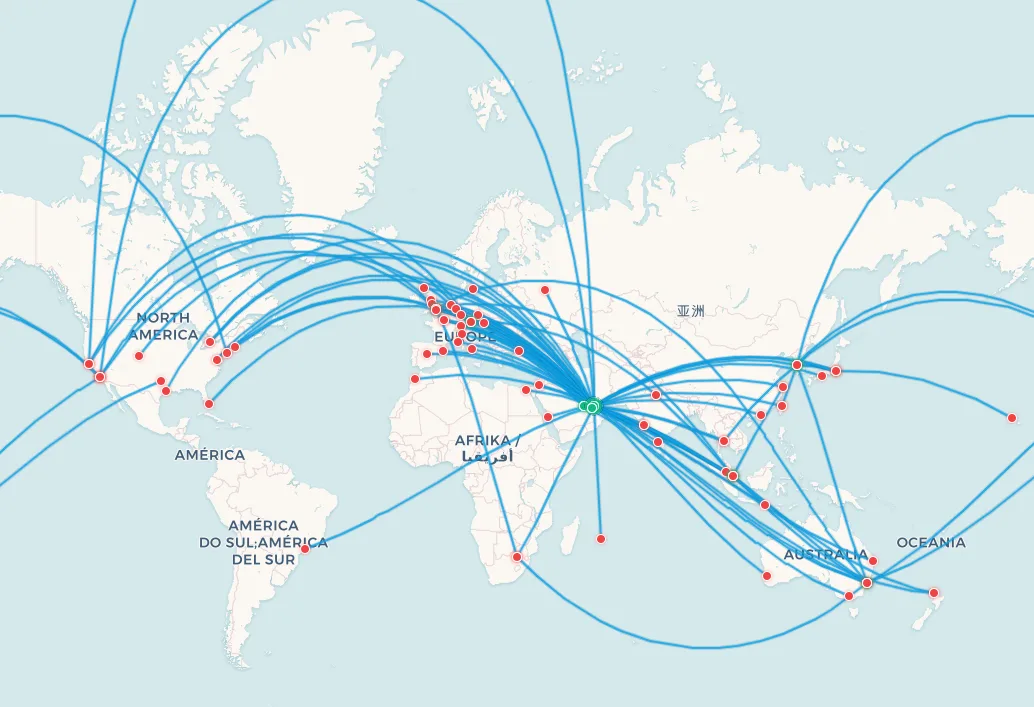
Global A380 route network overview
➕ Add these 92 routes to my map | 🗺️ View complete A380 network on map | 📥 CSV
Why airlines still love (or don't) the A380
Despite its engineering success, the A380 faced significant commercial challenges. As noted by Aerospace Global News, airline market preferences shifted over time. Instead of flying very large aircraft between major hubs, many airlines began favoring smaller, more fuel-efficient widebody jets like the Boeing 787 and Airbus A350, which proved more flexible and economically viable for point-to-point routes.
Notably, no US-based carrier ever ordered or operated the A380, despite growing congestion at airports like New York JFK and Los Angeles. Airbus announced the end of A380 production in 2019, with the final aircraft delivered to Emirates in 2021.
However, the A380 remains attractive for specific use cases:
- Slot-Constrained Airports: Airports like London Heathrow, Dubai, and Singapore have limited takeoff and landing slots. The A380 maximizes passenger capacity per slot.
- High-Demand Routes: Popular routes with consistent high traffic benefit from the A380's capacity.
- Premium Experience: The spacious cabin allows airlines to offer luxury amenities like onboard lounges, bars, and showers in first and business class.
- Operational Efficiency: For airlines with the right network, one A380 can replace two smaller widebody aircraft, reducing crew costs and gate usage.
Tips for flying the A380
Want to experience the superjumbo for yourself? Here are some insider tips:
- Book Upper Deck: The upper deck (especially on Emirates and Singapore Airlines) offers a quieter, more exclusive experience with smaller cabins and often newer interiors.
- Choose Your Airline Wisely: Emirates offers the most extensive A380 network. Singapore Airlines pioneered the type and maintains high service standards. ANA's Flying Honu liveries make for unforgettable photos.
- Target Long-Haul Routes: The A380 shines on ultra-long-haul flights where its spacious cabin makes the difference. Routes like Sydney-London on Qantas or Dubai-Los Angeles on Emirates are ideal.
- Experience Different Classes: If possible, try both upper and lower deck seating. Many passengers prefer the upper deck for its intimate feel.
- Window Seats: The A380's windows are larger than most aircraft, providing excellent views. Rows 71-73 on the upper deck offer unobstructed views on many configurations.
- Onboard Lounges: If flying premium classes, explore the onboard lounges and bars available on Emirates, Etihad, and others.
The future of the A380
While production has ended, the A380 is expected to remain in service for many years to come. Several airlines are currently refurbishing their fleets with updated cabins and premium products. With no comparable aircraft on the horizon and increasing passenger demand returning to pre-pandemic levels, the superjumbo's unique capacity advantages ensure it will continue to serve the world's busiest routes through the 2030s.
As Aerospace Global News notes in their comprehensive analysis, "Today, the Airbus A380 remains an iconic symbol of aviation ambition and engineering excellence. Though its commercial lifespan was shorter than hoped, it demonstrated what was possible in aircraft design and left a lasting impression on passengers and the aviation industry alike."
Track your A380 adventures
Have you flown on the Airbus A380? Add your superjumbo flights to My Flight Routes and visualize your journeys on the world's largest passenger airliner. Share your A380 experiences and see which routes you've conquered on this magnificent aircraft!
This article was written with reference to data and insights from Aerospace Global News' comprehensive report on current A380 operators. All fleet data sourced from Planespotters.net via Aerospace Global News unless otherwise stated. We thank Aerospace Global News for their permission to use this information and encourage readers to explore their excellent aviation coverage.