The Kangaroo Route is in chaos
Since the outbreak of war between Israel, the United States and Iran in late February 2026, the world's most important long-haul corridor - the so-called Kangaroo Route connecting Australia and Europe - has been severely disrupted. Airspace closures over Iran, the UAE, Kuwait, Qatar and Israel have effectively grounded the Gulf carriers that millions of Australians rely on every year.
Approximately 1.4 million Australians travel through the Middle East annually, the vast majority of them on their way to or from Europe. Those flights now either can't operate, are severely limited, or face significantly longer detours.
Between Saturday and Monday evening in the first week of March alone, 7,760 flights were cancelled globally according to flight tracking website FlightAware. Airfares on alternative routes have since skyrocketed - some travellers report fares reaching ten times the original price in the immediate aftermath of the closures.
This article draws on reporting from ABC News, The Canberra Times, The Guardian, and Guardian Australia. We've compiled and organised the information into a practical route guide for travellers.
Which airspace was closed?
From 1 March 2026, when US-Israeli strikes on Iran triggered a cascade of emergency airspace closures, commercial aviation was suspended over the following countries. Some closures have been lifted or revised since then - always check smartraveller.gov.au and your airline for the latest status before travelling:
- Iran - closed from 1 March 2026
- United Arab Emirates - closed from 1 March 2026 (Dubai, the world's busiest international airport, suspended all operations)
- Kuwait - closed from 1 March 2026
- Qatar - closed from 1 March 2026 (Doha's Hamad Airport suspended)
- Israel - closed from 1 March 2026
- Iraq - closed from 1 March 2026
- Bahrain, Jordan, Lebanon - fully closed or heavily restricted from 1 March 2026
- Syria - partially reopened in early March 2026, with a single air corridor in the north to assist transit flights
Combined with the ongoing closure of Russian airspace (now over four years since Russia's invasion of Ukraine), pilots from non-Middle Eastern carriers must navigate a significantly narrowed set of flyable corridors to connect Australia and Europe.
Airlines most affected
The three Gulf mega-carriers - Emirates, Qatar Airways and Etihad - have borne the brunt of the disruption. All three have either fully suspended or dramatically curtailed operations, leaving passengers scrambling for alternatives.
- Emirates suspended all Dubai flights. Passengers booked between late February and early March were offered full refunds or free rebooking.
- Qatar Airways suspended Doha services. Virgin Australia, which codeshares with Qatar for European routes, cancelled multiple services.
- Etihad suspended all Abu Dhabi flights.
As these carriers slowly resume limited operations to work through the passenger backlog, seat availability remains severely constrained and fares on all long-haul routes have surged. Qantas has already announced fare increases on international routes, citing "significant increases in jet fuel prices" driven by the conflict.
Alternative Route 1: The Caucasus Corridor
Via Armenia, Azerbaijan and Georgia
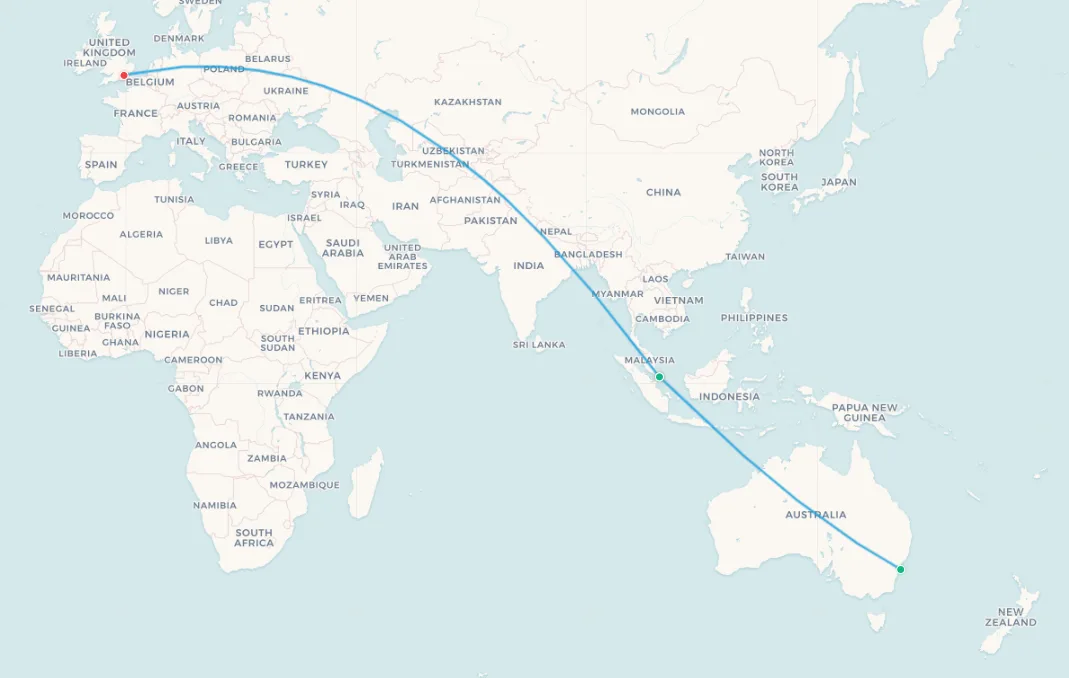
The most common workaround currently in use by major Asian carriers (Singapore Airlines, Cathay Pacific, Qantas) routes flights far north of the conflict zone - through a narrow passage over the Caucasus region and Central Asia: Armenia, Azerbaijan, Georgia and Uzbekistan.
This corridor sits south of the Ukraine war zone and north of the Iranian closures, but it is narrow and already at capacity. Pilots have been notified of increased traffic congestion in the region. There are also emerging risks: a drone fired at Azerbaijan (with Iran denying responsibility) briefly caused temporary airspace closures, highlighting the fragility of this corridor.
Aviation expert Neil Hansford told ABC that if the Caucasus corridor were closed, airlines could still route via Egypt to the south. However, the corridor remains open for now and is the primary workaround for Asian flag carriers connecting Australia and Europe.
➕ Add these 2 routes to my map | 🗺️ Preview these routes on the map | 📥 CSV
Search flights Sydney → LondonSearch flights SYD → LHRAlternative Route 2: Via Asian hubs (non-Middle Eastern)
Singapore, Hong Kong, Kuala Lumpur, Bangkok, Taipei, Tokyo
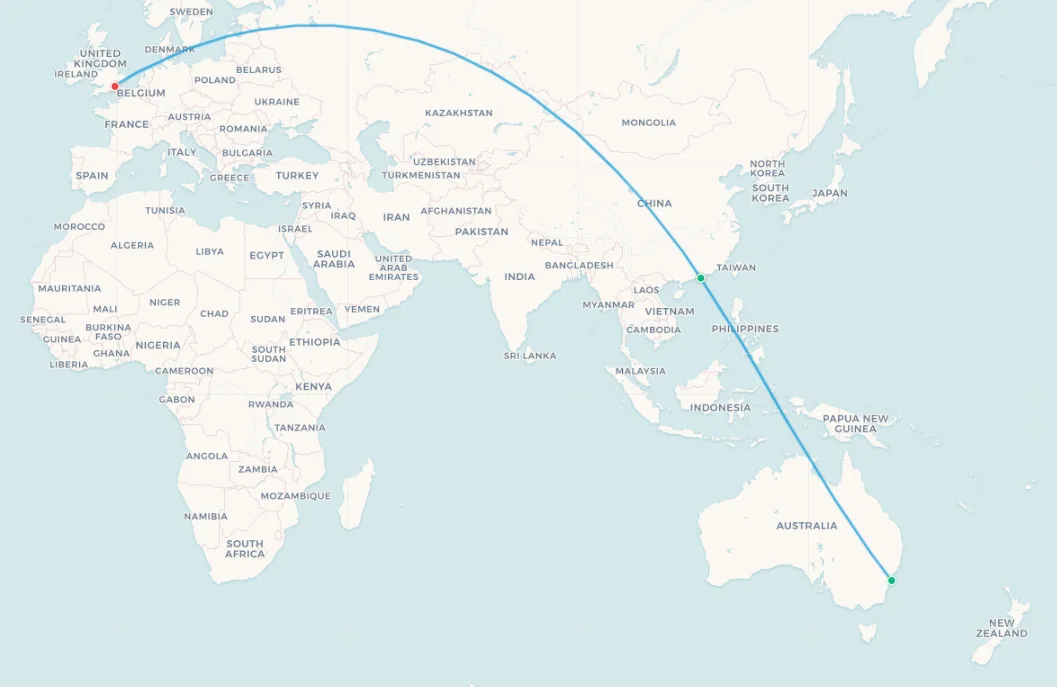
For most travellers, the most practical alternative to the Middle East is routing through an Asian hub outside the conflict zone. These routes operate normally and offer competitive connections to European cities.
Airlines currently operating via this routing include:
- Singapore Airlines (via Singapore) - flights between Australia/NZ and Singapore running at over 91% capacity
- Cathay Pacific (via Hong Kong)
- Malaysia Airlines (via Kuala Lumpur)
- Thai Airways (via Bangkok)
- EVA Air / China Airlines (via Taipei)
- Japan Airlines / ANA (via Tokyo)
- Qantas (via Singapore to Perth, or continuing to London/Paris)
Be aware: seat availability is very limited and changing rapidly. Flight Centre Travel Group advises passengers to secure bookings promptly and maintain flexibility. According to Griffith University tourism lecturer Zara Zarezadeh, travellers are actively migrating toward Singapore and other Asian hubs, driving up load factors and prices significantly.
➕ Add these 2 routes to my map | 🗺️ Preview these routes on the map | 📥 CSV
Search flights Sydney → Hong KongSearch flights SYD → HKGAlternative Route 3: Chinese carriers via Russia
A shortcut most Western airlines can't use
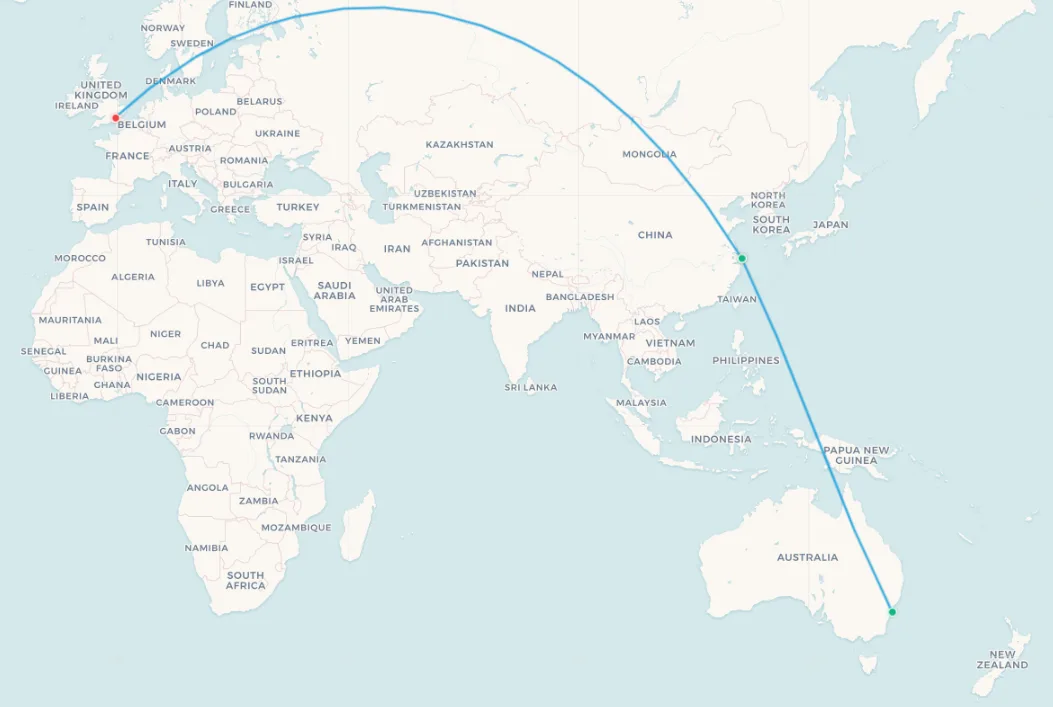
Chinese airlines hold a notable advantage in the current situation. While most European carriers are barred from Russian airspace (in retaliation for Russia's war in Ukraine), Chinese airlines are not subject to the same restrictions and can fly the more direct route over Russia between Asia and Europe.
This gives airlines such as China Southern, China Eastern and Air China a meaningful edge in both flight times and fuel costs on routes connecting Australian cities via Chinese hubs (like Shanghai, Beijing, Guangzhou) to European destinations. If schedule and price work for you, this can be an underrated option.
➕ Add these 2 routes to my map | 🗺️ Preview these routes on the map | 📥 CSV
Search flights Sydney → ShanghaiSearch flights SYD → PVGAlternative Route 4: Qantas direct Perth routes
Bypassing the Middle East entirely from Western Australia
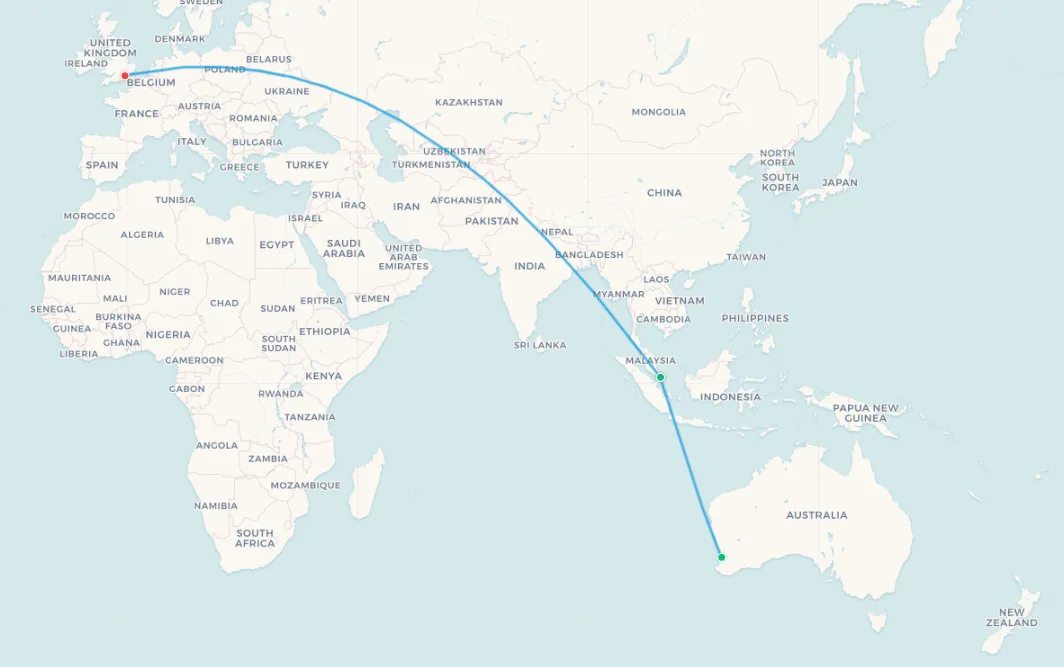
Qantas operates several long-haul routes from Perth that sidestep the Middle East entirely and remain largely unaffected:
- Perth → London (with a temporary refuelling stop in Singapore, adding up to 60 extra seats per flight)
- Perth → Paris (direct)
- Perth → Rome (seasonal)
Qantas reports its European routes are running at over 90% capacity in March 2026 - approximately 15 percentage points above normal for this time of year. Lower-fare options are selling out fast, so early booking is essential.
East-coast Australian travellers can connect to Perth domestically with Qantas or Virgin Australia before boarding these European services.
➕ Add these 2 routes to my map | 🗺️ Preview these routes on the map | 📥 CSV
Search flights Perth → LondonSearch flights PER → LHRAlternative Route 5: The "Southern Bypass" via Johannesburg
Africa as a bridge between hemispheres
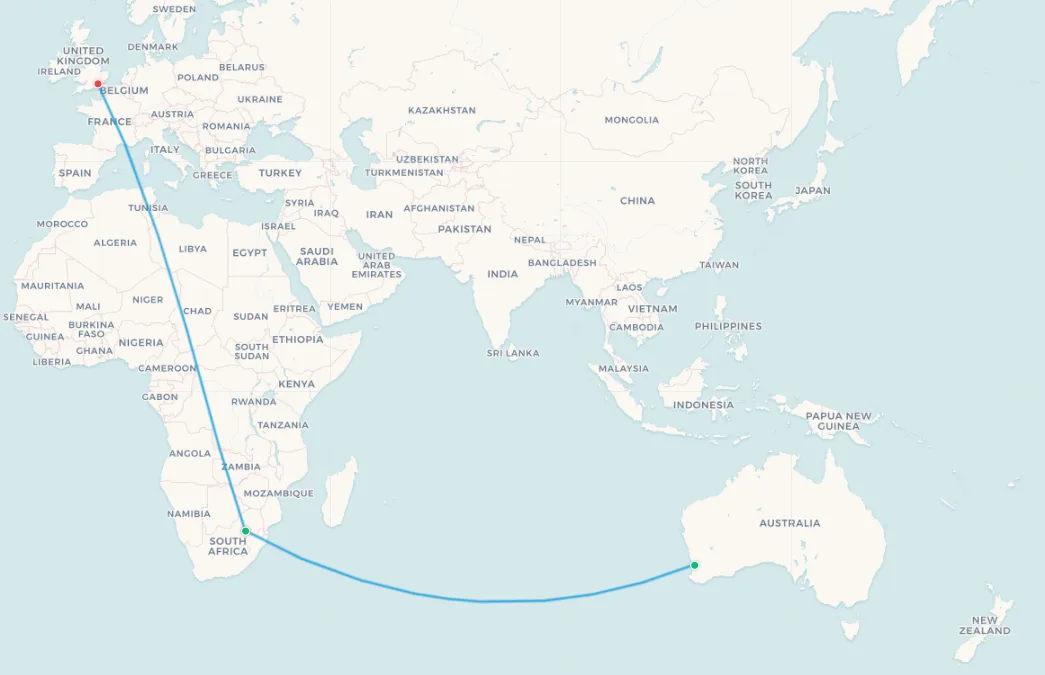
One of the more creative solutions to emerge from the crisis is using Qantas's recently inaugurated Perth–Johannesburg service as a strategic "southern bypass" to Europe - avoiding the conflict zone entirely by staying within Southern Hemisphere and western African airspace.
From Johannesburg, travellers can connect to major European hubs - London, Frankfurt, Paris - via partner airlines such as Lufthansa, Air France or South African Airways.
Professor Gui Lohmann from Edith Cowan University notes this route provides a much higher level of predictability compared to the Caucasus corridor, since it avoids all Middle Eastern and Eastern European conflict zones entirely. The trade-off is a longer overall journey time.
➕ Add these 2 routes to my map | 🗺️ Preview these routes on the map | 📥 CSV
Search flights Perth → JohannesburgSearch flights PER → JNBAlternative Route 6: Via the Americas
Going the long way around
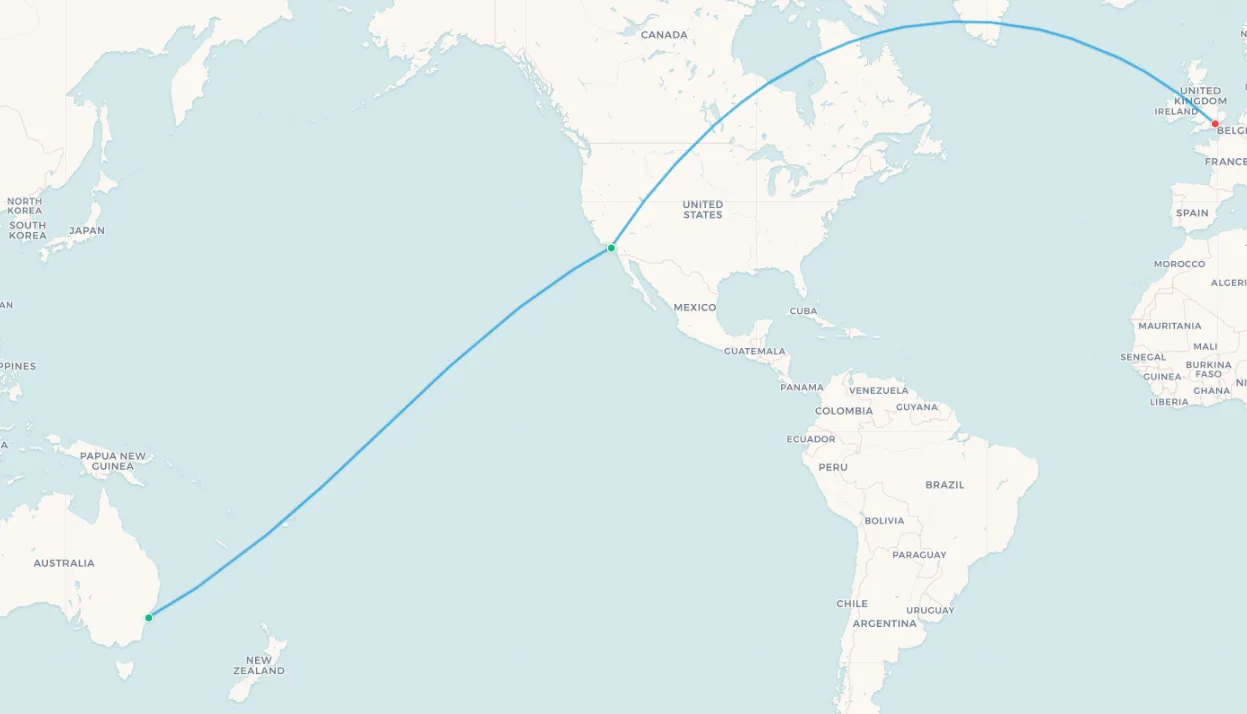
For travellers comfortable with a very long journey, routing via the United States or Canada and then on to Europe is another option free from both the Middle East and Russian airspace restrictions. Airlines available on this routing include:
- United Airlines (via Los Angeles or San Francisco)
- American Airlines (via Los Angeles or Dallas)
- Air Canada (via Vancouver or Toronto)
- Qantas / American Airlines codeshare
Total journey times Australia → Americas → Europe can reach 30+ hours including connections, making this the least practical option for most travellers. However, for those with flexibility or who want to combine a US stopover with their European trip, it remains a viable - if expensive - alternative.
➕ Add these 2 routes to my map | 🗺️ Preview these routes on the map | 📥 CSV
Search flights Sydney → Los AngelesSearch flights SYD → LAXWhat about costs?
The disruption has had a significant impact on airfares across all alternative routes. Key trends to be aware of:
- Some fares spiked to 10 times the pre-crisis price in the first days of the conflict.
- Qantas has formally raised international fares, citing jet fuel price increases driven by the conflict.
- Singapore Airlines flights are running at over 91% capacity.
- Qantas European services are over 90% full, 15 points above seasonal norms.
- Alternative routes involve longer flying times, adding fuel burn and operational costs that are passed on to passengers.
If you haven't yet booked, book as early as possible and be flexible with airlines, dates and routing. Prices are expected to remain elevated for as long as the conflict and airspace closures persist - which aviation experts warn could be months, not weeks.
Your rights if your flight is cancelled
If your airline cancels your flight due to the conflict, your entitlements depend on which airline you booked with and the fare type. General guidance:
- If the airline cancels: you are generally entitled to a full refund or free rebooking. Emirates, Etihad and Qatar have all offered these options for flights affected in early March.
- If you cancel yourself: standard fare rules apply. You will likely face cancellation fees and may not receive a full refund. The ACCC advises contacting your airline directly before making any decisions.
- Don't cancel speculatively if your flight is not yet affected - wait to see what the airline does. Cancelling a future flight today may be treated as a "change of mind" cancellation under Australian Consumer Law, foregoing any refund entitlement.
A note on travel insurance
Unfortunately, standard travel insurance policies do not cover war or armed conflict. The Insurance Council of Australia (ICA) has confirmed that cover for loss or injury arising from war, armed conflict or civil unrest is broadly excluded across almost all policies.
Exceptions may include:
- A "cancel for any reason" clause - may apply if you haven't yet departed Australia. Check your policy.
- Costs unrelated to the conflict - some policy elements may still be valid even in conflict-affected regions, depending on your insurer.
Australia's Smartraveller website currently lists Israel, Iran, Iraq, Bahrain, Kuwait, Lebanon, Qatar and the UAE as "Do Not Travel" destinations. Always check smartraveller.gov.au before departing.
Practical tips for travellers
- Book early - seats on alternative routes are filling fast and fares are rising daily.
- Stay flexible - consider flexible or refundable tickets even if they cost more upfront.
- Allow extra connection time - flight diversions and detours are disrupting schedules, causing delays that can cascade through connections.
- Monitor real-time flight tracking tools - useful for tracking real-time airspace usage and potential disruptions.
- Check Smartraveller daily - travel advisories are being updated frequently as the situation evolves.
- Contact your airline directly before making any changes - phone lines are congested, so use online tools or travel agents where possible.
- Consider Asian hub alternatives - Singapore, Hong Kong and Kuala Lumpur offer reliable connections and are operating normally.
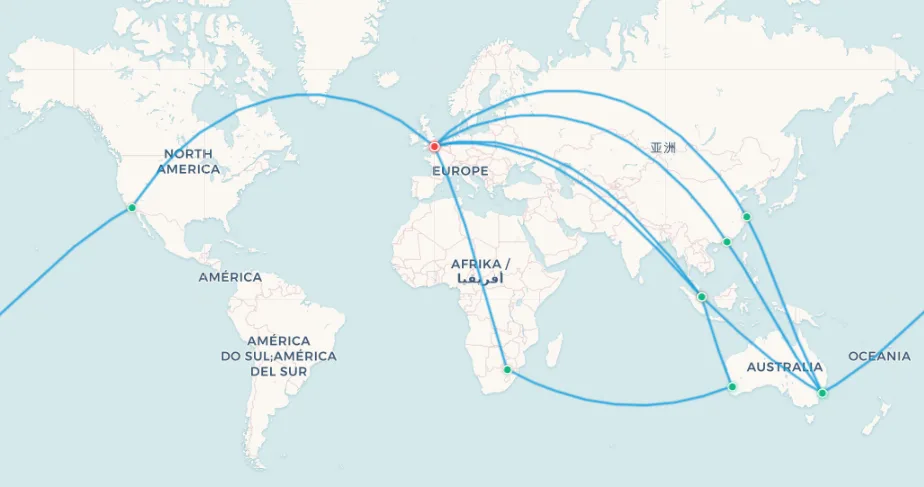
View all 6 alternative routes on one map
➕ Add these 12 routes to my map | 🗺️ View all routes on interactive map | 📥 CSV
Looking ahead
RMIT aviation expert Justin Brownjohn has warned that even if the conflict were to end tomorrow, "we're probably not going to see a return to normal operations" for at least a week - and likely much longer given the scale of the disruption.
Aviation expert Neil Hansford remains cautiously optimistic, noting that modern air traffic control systems are "highly computerised" and can manage increased traffic loads in available corridors. He also notes that even a major expansion of hostilities is unlikely to leave airlines with no viable path between Australia and Europe.
For now, the advice is clear: plan ahead, stay informed, and build in both flexibility and extra budget if you're travelling between Australia and Europe in 2026.
Map your Australia to Europe route
Flying between Australia and Europe in 2026? Add your itinerary to My Flight Routes to see how each alternative routing compares, whether you connect through Asia, the Middle East or across the Pacific.