The Planes Nobody Is On
Somewhere in Europe this week, an airliner will push back from a gate, taxi out, take off, cruise for an hour and land again with almost nobody in the cabin. No emergency, no diversion, no mistake. It is on the timetable, it burns real fuel, and the airline planned it that way. Aviation calls these ghost flights, and they are one of the strangest side effects of how the world allocates the right to land at a busy airport.
The phrase covers more ground than most people expect. It describes near-empty scheduled services flown to protect airport slots, it gets stretched to cover ferry and repositioning flights that were never for sale, and in accident investigation it means something far darker: an aircraft still flying itself after everyone aboard has lost consciousness. This guide covers all of it, with every route mapped, shareable and downloadable.
What Exactly Is a Ghost Flight?
The working definition used by regulators, researchers and most reporting is precise: a ghost flight is a scheduled commercial flight operating with fewer than 10% of its seats filled. On a 180-seat A320 that means seventeen passengers or fewer. The extreme version, a flight with literally zero passengers aboard, is rarer but very much real.
What matters is that it is a scheduled flight. It appears in the timetable, it has a flight number, and you could in principle buy a seat on it. That distinguishes it from the other kinds of empty flying, which get lumped in with ghost flights but are genuinely different animals.
| Type | Sold to passengers? | Why it flies empty |
|---|---|---|
| Ghost flight | Yes, in theory | Scheduled service kept in the timetable to satisfy slot usage rules |
| Ferry / positioning flight | No | Moving an aircraft for maintenance, delivery, storage or the next rotation |
| Empty leg (dead leg) | Sometimes, at a discount | A private charter returning or repositioning after a one-way trip |
| Ghost plane | Not applicable | An aircraft flying on autopilot after the crew has been incapacitated |
The 80/20 Rule: Why an Empty Plane Beats a Cancelled One
At the world's most congested airports, a takeoff or landing is not something an airline simply books. It holds a slot: a permission to use the runway in a specific time window, allocated season by season by an independent coordinator. There are only so many of them, nobody is making more, and at the busiest airports demand has outstripped supply for decades.
The mechanism that turns this into empty flying is the 80/20 rule, better known as "use it or lose it". To keep a slot series for the equivalent season next year, an airline must actually operate it at least 80% of the time. Fall below that and the slots return to the pool, where any competitor can claim them for free. Airlines call the slots they have held onto this way "grandfather rights", and they guard them fiercely.
Fiercely, because slots are among the most valuable assets an airline owns. In 2016 Oman Air paid a reported 75 million US dollars to Air France-KLM for a single early-morning slot pair at London Heathrow, still the largest publicly known slot deal in history. American Airlines had paid SAS around 60 million dollars for one the year before. Against numbers like that, the fuel bill on a handful of empty rotations stops looking like waste and starts looking like an insurance premium.
The same logic applies on the other side of the Atlantic, where the FAA runs just three fully slot-controlled Level 3 airports: New York JFK, LaGuardia and Washington Reagan National. JFK measures the 80% requirement across a full summer or winter season; LaGuardia and Reagan measure it over rolling two-month windows, which is a much less forgiving clock.
The Original Ghost Flight: Heathrow to Cardiff
Long before the pandemic made the term famous, one route showed exactly how far an airline will go to protect a slot pair. British Mediterranean Airways, a British Airways franchise partner, held a valuable Heathrow slot pair used for its service to Tashkent, Uzbekistan. When unrest in the country forced the airline to drop the route, it faced a choice: hand back a Heathrow slot pair worth tens of millions, or keep flying something.
It chose to keep flying something. From October 2006, BMed operated an Airbus scheduled service from Heathrow to Cardiff six times a week, with a full crew and no passengers at all. The airline reportedly spent more than 2 million pounds a month on those rotations, for a little over a year, before the flights were scrapped in November 2007 after the carrier was absorbed by BMI. Nothing about that arithmetic was irrational: an empty 45-minute hop to Wales was simply cheaper than losing the right to land at Heathrow forever.
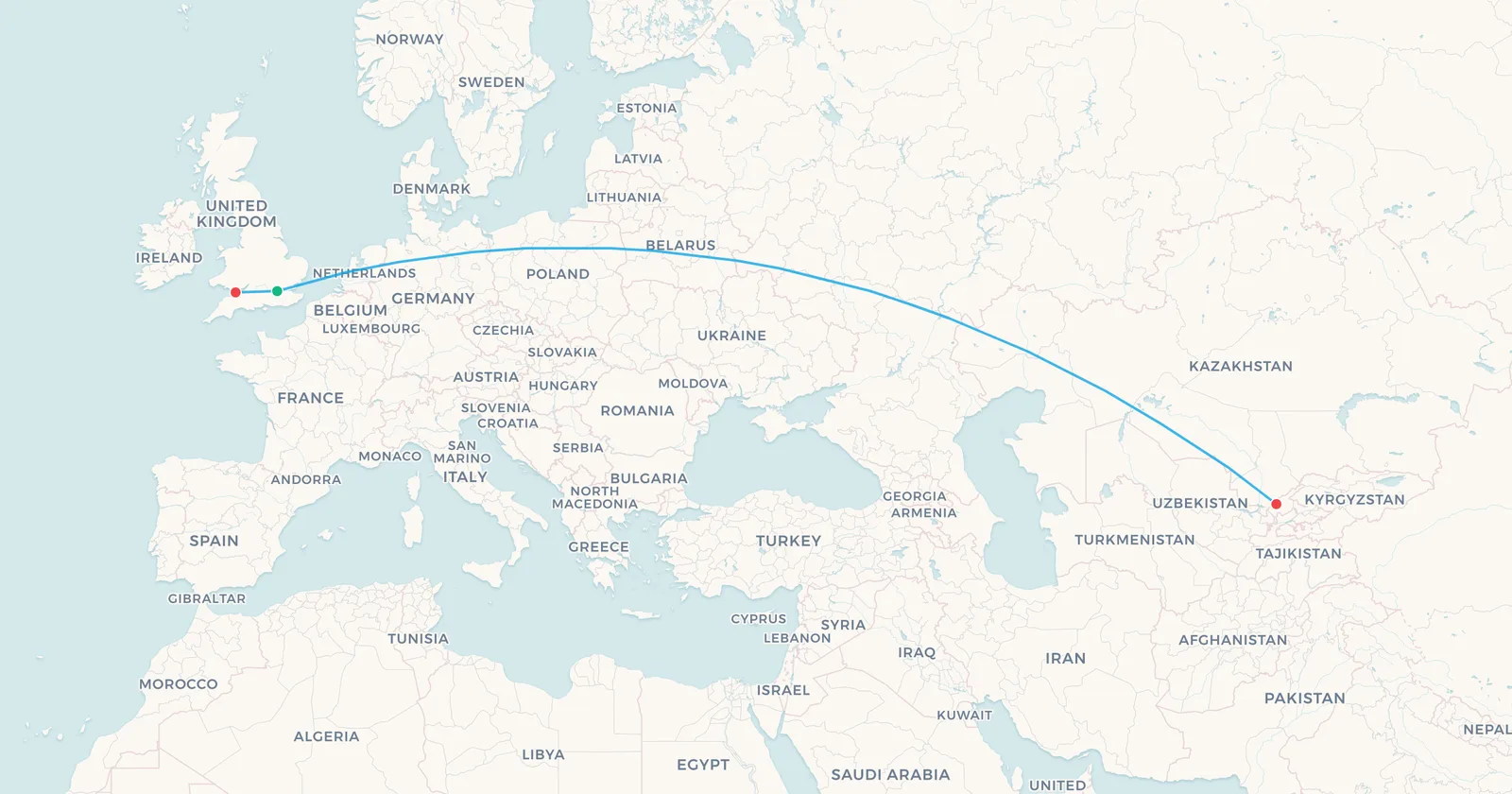
➕ Add these 2 routes to my map | 🗺️ Preview these routes on the map | 📥 CSV
Search flights London → TashkentSearch flights LHR → TASThe Tashkent link is worth noting for another reason: it is a textbook example of a route that vanished for reasons nothing to do with demand, the same pattern behind many of the most famous discontinued flight routes.
The Pandemic Peak, in Numbers
Ghost flights had been a quiet industry oddity for decades. In 2020 they became a scandal, because demand collapsed while the slot rules initially did not. The EU suspended the 80/20 rule in March 2020, then phased it back in through transitional thresholds, but the gaps and the uncertainty between those steps produced an extraordinary amount of empty flying. Here is what the record actually shows.
| Figure | What it measures | Source |
|---|---|---|
| ~15,000 | Near-empty or empty flights from UK airports, March 2020 to September 2021 | UK Civil Aviation Authority |
| 4,910 | Of those, the share departing London Heathrow alone, the highest of any UK airport | UK Civil Aviation Authority |
| 5,000+ | Completely empty flights to or from the UK since 2019 | UK government data via freedom of information requests |
| 35,000+ | UK flights that operated below 10% capacity over the same period | UK government data via freedom of information requests |
| 18,000 | Unnecessary flights Lufthansa said it expected to operate in winter 2021/22 | Lufthansa Group, January 2022 |
| 3,000 | Of those, the share attributed to Brussels Airlines | Belgian federal mobility ministry |
| 100,000 | Ghost flights Greenpeace projected across European skies that winter, extrapolated from the Lufthansa figure | Greenpeace, January 2022 |
| 1.4 million cars | Annual emissions Greenpeace said that projection was equivalent to | Greenpeace, January 2022 |
| 2.5 million tonnes CO₂ | Estimated emissions from ghost flights in 2020 and 2021 | Transport & Environment |
Two things are worth saying about these numbers. First, the biggest ones are projections, not counts: Greenpeace's 100,000 figure was extrapolated from a single Lufthansa interview, and IATA has pushed back hard on the idea that ghost flying was ever industry-wide rather than concentrated in specific networks. Second, the smaller, boring numbers, the ones that come from regulators counting actual departures, are the ones that hold up, and they are still remarkable.
The flying itself was rarely glamorous. It was overwhelmingly short-haul hub feeder sectors: the sixty to ninety minute hops between European hubs that exist to funnel connecting traffic into long-haul banks. When the long-haul banks emptied out, the feeders had no purpose left except the slot they defended. The map below plots the Lufthansa Group hub sectors of exactly this shape, the kind of flying that made up that 18,000 figure.
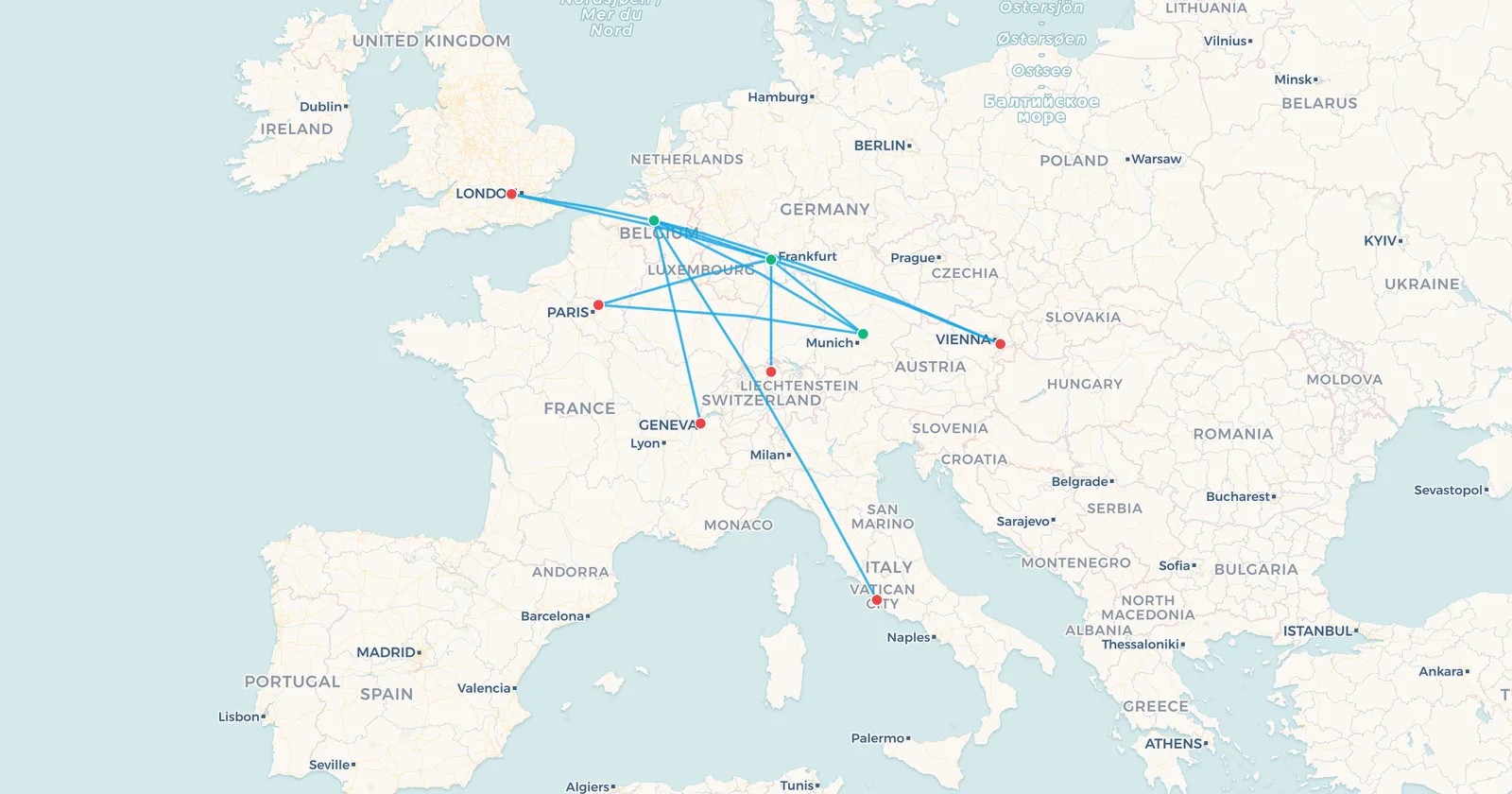
➕ Add these 12 routes to my map | 🗺️ Preview these routes on the map | 📥 CSV
Search flights Frankfurt → LondonSearch flights FRA → LHRThese are ordinary, useful routes in a normal year. That is precisely the point: a ghost flight is not a special aircraft or a secret schedule, it is a completely normal sector that happens to be flying with nobody on it. Some of these corridors are among the busiest flight routes in the world when demand is healthy.
Deliberately Near-Empty: Research Flights, Ferries and Boneyard Runs
Not every empty aircraft is defending a slot. Some of aviation's most interesting flights were near-empty on purpose.
In October 2019, Qantas QF7879 flew nonstop from New York to Sydney in 19 hours 16 minutes with around 50 people aboard a Boeing 787-9 that can seat 236. A month later QF7880 did the same thing from London in 19 hours 19 minutes with 52 people. The empty cabin was the experiment: researchers from the University of Sydney tracked passenger sleep, light exposure and alertness, while a separate team monitored the pilots, all feeding into what became Project Sunrise. Those two sectors would have ranked near the top of any list of the world's longest flights, and they carried roughly a fifth of a normal load.
Then there are the ferry flights, which are not sold to anyone at all. When the world grounded its fleets in 2020, airlines flew hundreds of wide-bodies to dry-climate storage fields: Alice Springs in the Australian outback took Singapore Airlines and Cathay Pacific jets, Teruel in Spain absorbed European A380s, and Victorville in the Californian desert filled up with North American metal. Every one of those was a real, long, completely empty flight, and none of them counts as a ghost flight under the strict definition, because none of them was ever in a passenger timetable.
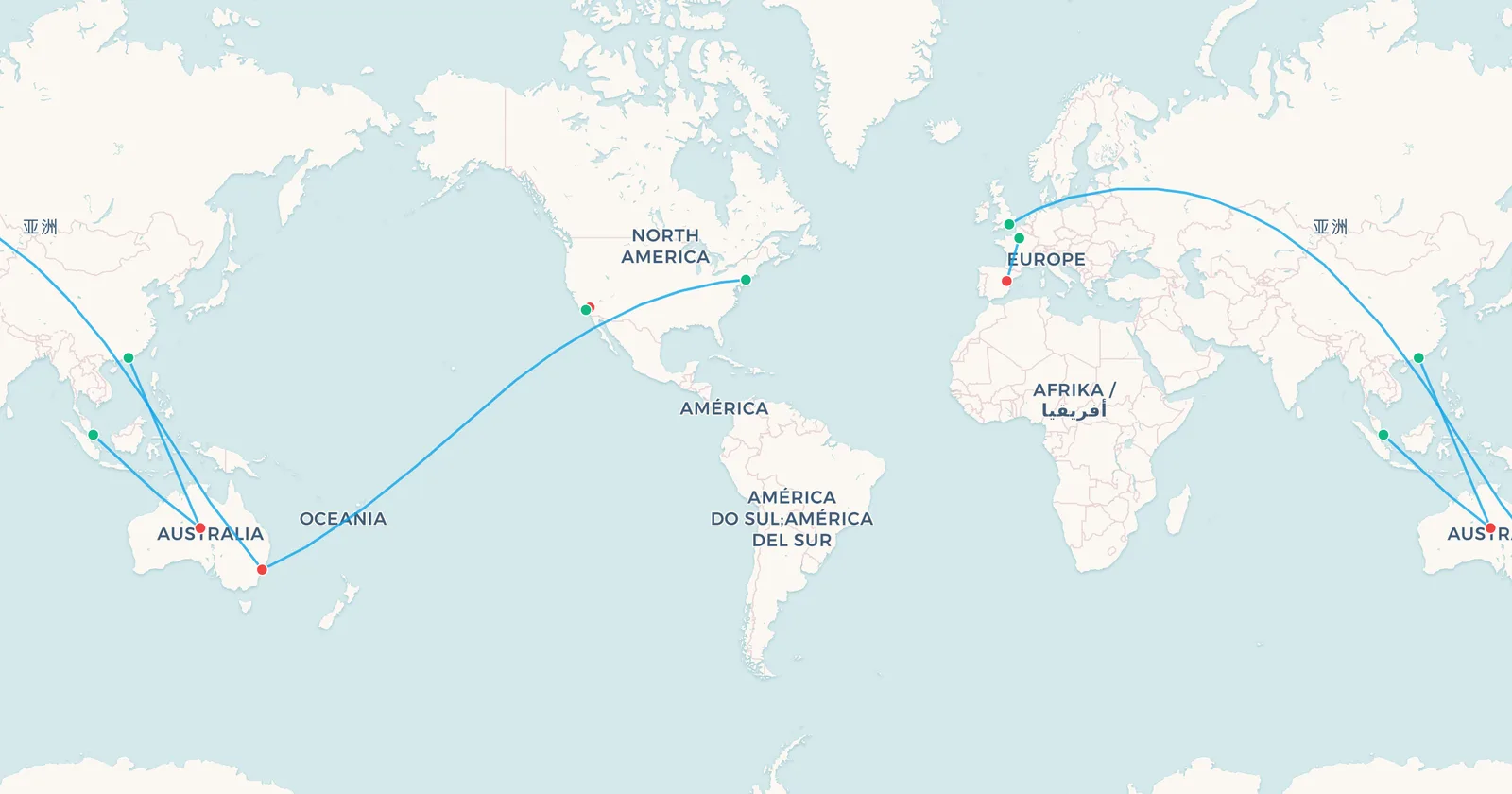
➕ Add these 6 routes to my map | 🗺️ Preview these routes on the map | 📥 CSV
Search flights London → SydneySearch flights LHR → SYDOne more variant deserves a mention: the "preighter". With passenger demand gone but cargo demand soaring, airlines flew passenger jets with empty cabins and full holds, and in some cases strapped boxes into the seats. Passenger-free, but far from pointless.
The Other Ghost Flight: Nobody at the Controls
There is a second, much older meaning of the term, and it has nothing to do with slots. In accident investigation, a ghost plane is an aircraft that keeps flying, straight and level and perfectly stable, after everyone aboard has been incapacitated. The cause is almost always the same: a pressurisation failure, followed by hypoxia, followed by an autopilot dutifully flying a route toward a destination nobody will reach.
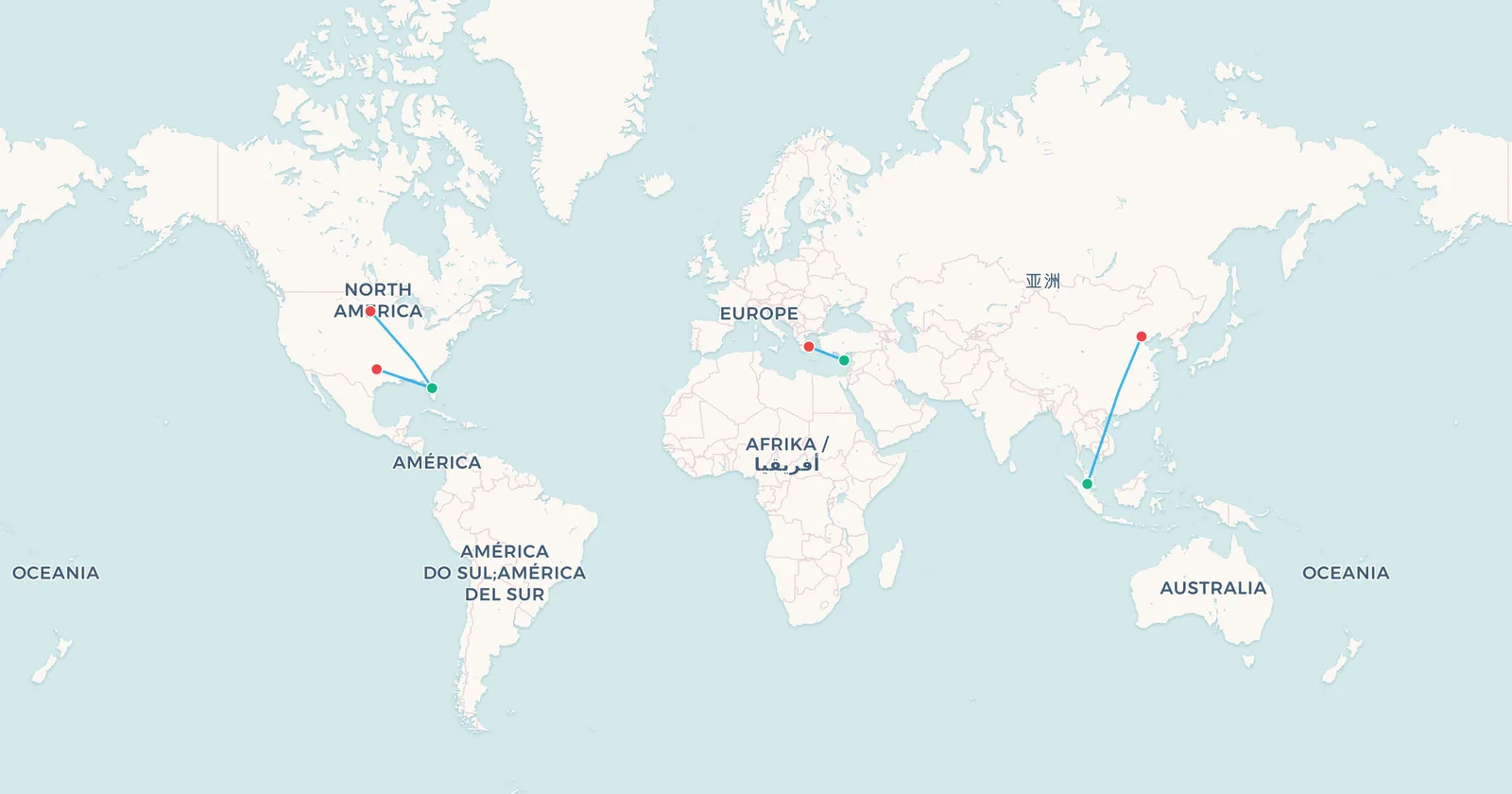
Helios Airways Flight 522, 14 August 2005. A Boeing 737-300 left Larnaca for Athens with its pressurisation selector still set to manual after maintenance, a setting neither the engineers nor the crew caught. The cabin never pressurised. The aircraft climbed, the crew and passengers lost consciousness, and the autopilot flew the filed route to Athens and entered a holding pattern. Greek F-16s intercepted it and reported the captain's seat empty and the first officer slumped over the controls. It eventually ran out of fuel and crashed near Grammatiko, killing all 121 people aboard. It remains the deadliest aviation accident in Greek history.
Learjet 35A N47BA, 25 October 1999. A charter carrying US Open champion Payne Stewart and five others left Orlando for Dallas Love Field. Shortly after departure the aircraft lost cabin pressure, and everyone aboard was incapacitated. Instead of turning west, it climbed to nearly 49,000 feet and flew northwest on autopilot for three hours and 54 minutes, shadowed by military fighters whose pilots could see nothing through iced-over cockpit windows, until it ran out of fuel and crashed in South Dakota, roughly 1,400 miles off its intended track.
Malaysia Airlines MH370, 8 March 2014. The most famous unresolved case in modern aviation. The 777 disappeared from secondary radar less than an hour into a Kuala Lumpur to Beijing service, turned back across the Malay Peninsula and continued for hours before satellite handshake data placed its final position in the southern Indian Ocean. Whether the final hours were a ghost flight in the hypoxia sense has never been established, and the main wreckage has never been found.
➕ Add these 4 routes to my map | 🗺️ Preview these routes on the map | 📥 CSV
The Payne Stewart entry is mapped twice on purpose: once as the Orlando to Dallas routing the flight was supposed to fly, and once as the track it actually flew, northwest to Aberdeen, South Dakota. The gap between the two lines is the whole story.
Are Ghost Flights Still Happening in 2026?
Yes, but the pressure that created the 2020 to 2022 spike has largely been engineered out. Four things changed.
- The rules went back to normal, then got sharper. The full 80% threshold has been back in force since the summer 2023 season. IATA's Worldwide Airport Slot Guidelines Edition 4 took effect on 1 August 2025, raising the minimum slot series length from five to seven, a change that only makes sense in a world where pandemic flexibility is considered over.
- There is now a proper escape valve. The WASG's Justified Non-Use of Slots provision lets a coordinator freeze the utilisation clock when something genuinely outside an airline's control interrupts a service. IATA has pushed for it to be applied on a rolling six-week basis during crises, which is the difference between "cancel and lose the slot" and "cancel and pick it up later".
- Regulators are actually using it. During the 2026 Middle East disruption, with airspace closed, routings lengthened and jet fuel supply tight, the UK became the first country to adopt the JNUS principles, confirming that airlines cancelling because of fuel shortages would not forfeit their slots. The same closures are what pushed several flagship long-haul routes onto detours, including the ones we tracked in our guide to airports with flights to every continent.
- The underlying law is under review. The European Commission opened a fitness check and public consultation covering the Slot Regulation in late 2025. A full recast has been stuck in Council since 2011, so nobody should hold their breath, but the "ghost flight" problem is explicitly on the table.
Meanwhile in the US, the FAA has repeatedly extended limited slot-usage waivers at JFK and LaGuardia because of air traffic control staffing shortages, for the opposite reason to Europe's: not to stop airlines flying empty, but to stop them being punished for flights the system itself cannot handle.
So the honest 2026 answer is this. Near-empty scheduled flights still operate, mostly on thin short-haul sectors in shoulder seasons, mostly for slot reasons, and in nothing like pandemic volumes. The mechanism that creates them has not been removed. It has been given a pressure-release valve.
How to Spot a Ghost Flight Yourself
You cannot see load factors on a flight tracker, but you can get surprisingly close with public information.
- Watch the seat map, not the price. Open the airline's own seat selection a day or two before departure. A wide-body long-haul flight with an almost entirely unassigned cabin at T-24 is telling you something the fare never will.
- Look for routes that make no network sense. A flag carrier operating a single daily rotation to a city it serves nowhere else in its network, at an odd time, on a slot-constrained airport pair, is the classic shape.
- Check whether the flight is bookable at all. Genuinely passenger-free positioning flights usually appear on trackers with a flight number but cannot be booked anywhere. That is the tell that separates a ferry flight from a ghost flight.
- Follow the season boundaries. Slot seasons flip at the end of March and the end of October. Unusual bursts of thin flying in the last weeks of a season are rarely a coincidence.
- Compare aircraft size to demand. A wide-body on a route that could not fill a regional jet is often about crew hours, maintenance positioning or slot defence rather than passengers.
Ghost Flight Facts Worth Knowing
- A slot is not a route. An airline can fly a Heathrow slot to anywhere it likes. That is why BMed could substitute Cardiff for Tashkent without losing the asset, and why "we cancelled the route" and "we gave up the slot" are completely different decisions.
- Ghost flights are a congestion problem, not a demand problem. They only exist where slots are scarce. Nobody flies an empty aircraft to protect a slot at an airport where slots are free.
- The 20% was always meant to be the flexibility. The rule allows a fifth of a slot series to go unflown precisely to absorb weather, technical cancellations and one-off disruption. Ghost flights happen when a shock is far bigger than the buffer the rule was designed around.
- The word means two things and both are correct. An empty scheduled flight and an autopilot flying an unconscious cabin have nothing in common except a name, which is why search results for "ghost flight" swing wildly between slot policy and accident reports.
- The record slot price still stands. No publicly disclosed deal has topped the 75 million dollars Oman Air paid for a Heathrow pair in 2016.
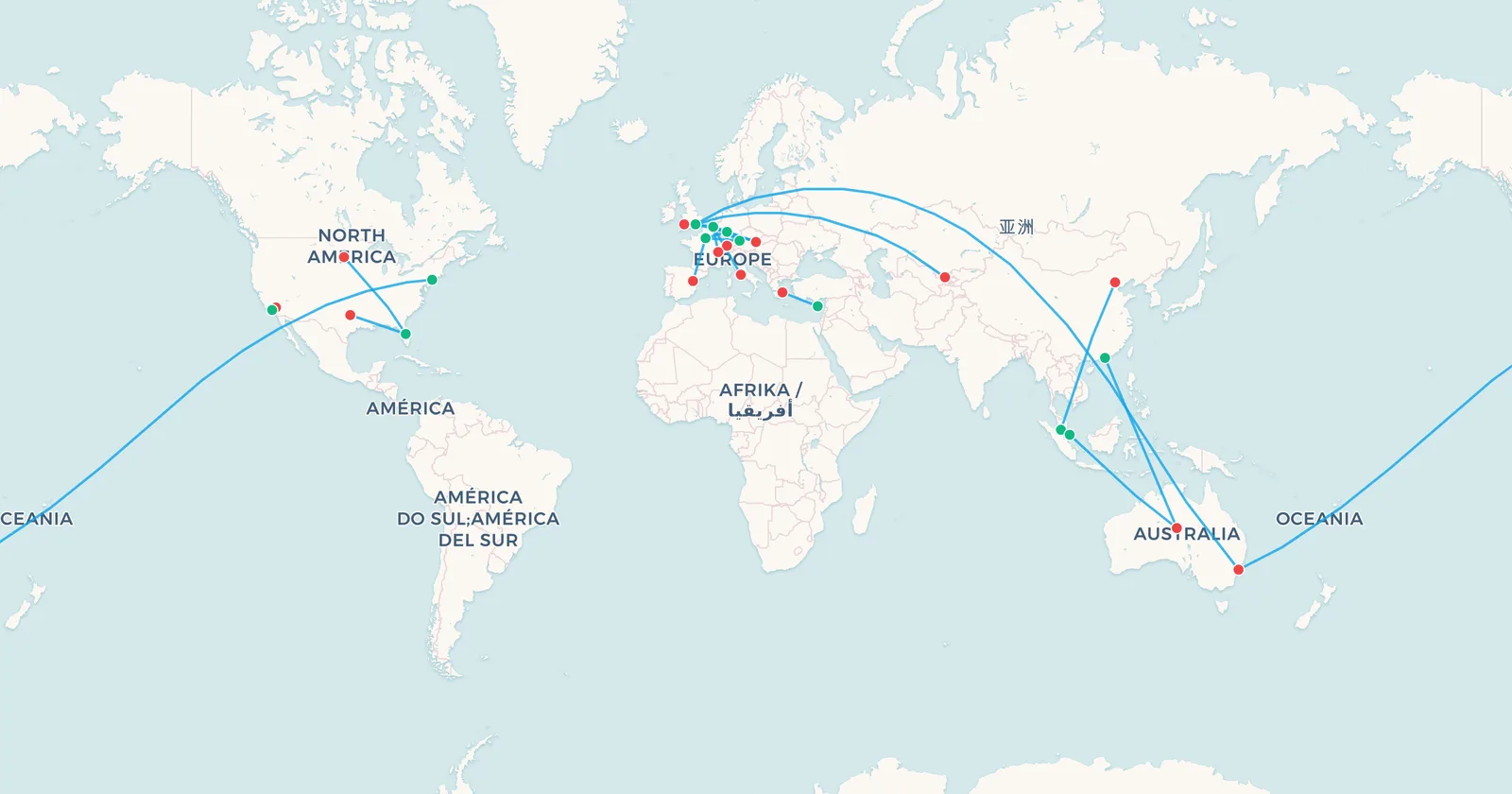
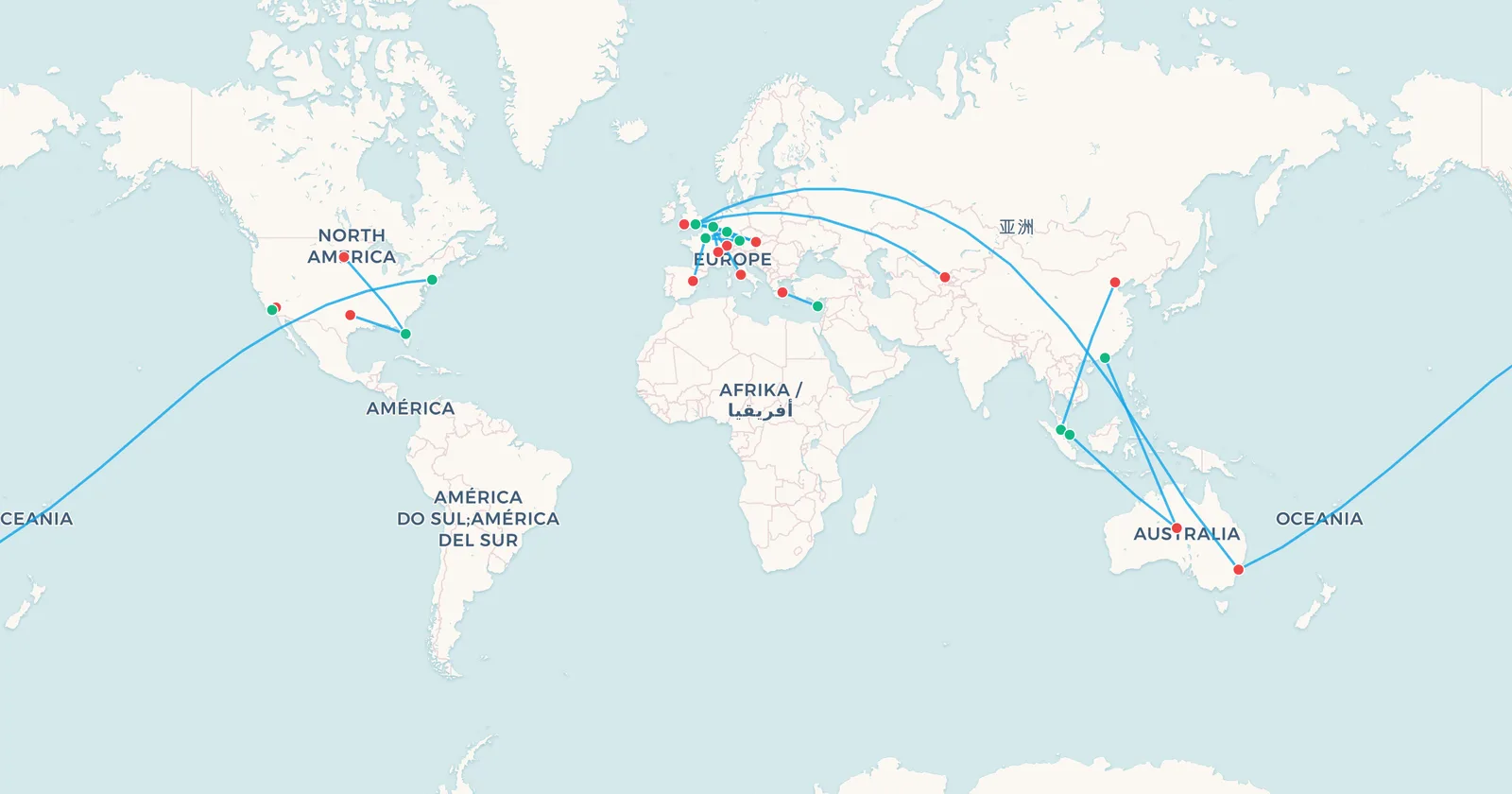
Every Ghost Flight in This Guide on One Map
Slot-protection rotations, deliberately near-empty research flights, storage ferries and the routes flown with nobody at the controls, all plotted together on a single interactive map.
➕ Add these 24 routes to my map | 🗺️ Preview these routes on the map | 📥 CSV
Every CSV on this page uses the same column format the app imports, so you can drop any of them straight into your own map and keep building from there. If you would rather reconstruct your real flying instead, our guide to finding your past flight history walks through how to dig it out of old emails and loyalty statements.
Frequently Asked Questions
What is a ghost flight?
A scheduled commercial flight operating with fewer than 10% of its seats filled, and in extreme cases with no passengers at all. Airlines fly them mainly to protect airport slots under use-it-or-lose-it rules.
Why do airlines fly empty planes instead of cancelling?
Because of the 80/20 rule. A slot series must be operated at least 80% of the time to be retained for the same season next year, and a Heathrow slot pair has sold for as much as 75 million dollars. Fuel is cheaper than losing that permanently.
How many ghost flights were there during the pandemic?
The UK CAA recorded almost 15,000 near-empty or empty flights from UK airports between March 2020 and September 2021, around 4,910 of them from Heathrow. Lufthansa said it expected 18,000 unnecessary flights in winter 2021/22, roughly 3,000 at Brussels Airlines.
Are ghost flights still happening in 2026?
Yes, but far fewer. The full 80% threshold is back, WASG Edition 4 took effect on 1 August 2025, and the Justified Non-Use of Slots exemption now lets regulators freeze the usage clock during airspace closures and fuel crises, as the UK did during the 2026 Middle East disruption.
What is the difference between a ghost flight and a ferry flight?
A ghost flight is in the passenger timetable and could in theory be booked. A ferry or positioning flight is never sold at all, and simply moves an aircraft for maintenance, delivery or storage. An empty leg is the private-charter equivalent, often resold at a discount.
Is a "flight to nowhere" a ghost flight?
No, and it is almost the opposite. The scenic loops airlines sold in 2020, taking off and landing at the same airport, were typically full of paying passengers. A ghost flight goes somewhere real with nobody aboard.
What is the other meaning of ghost flight?
In accident investigation, an aircraft still flying on autopilot after the crew has been incapacitated, usually by decompression and hypoxia. Helios Airways 522 and the 1999 Payne Stewart Learjet are the definitive cases.
Sources
Every figure in this article was checked against a primary regulatory document or the original reporting. The main sources, and what each one supports:
- The 80/20 rule and how slot series work: IATA's Worldwide Airport Slot Guidelines Edition 4 and the European Parliament Research Service briefing "Ghost flights: EU rules on airport slots".
- The 2026 relief measures: IATA on slot relief during the Iran crisis, covering the Justified Non-Use of Slots exemption and the UK's adoption of it.
- Where EU reform stands: the European Parliament's legislative train file on the slot regulation recast.
- US slot control: the FAA's Level 3 airport slot administration pages, for the JFK, LaGuardia and Reagan National usage rules.
- The pandemic figures: CNBC on Lufthansa's 18,000 winter flights, CNN on the Greenpeace projection and its emissions estimates, and the UK CAA data summarised by Simple Flying.
- Heathrow to Cardiff, and what a slot is worth: Key.Aero on why British Mediterranean flew empty for a year, and Aviation Week on the record Oman Air slot deal.
- The near-empty and ghost plane flights: the Flightradar24 blog on the Qantas Project Sunrise research flights and the accident record for Helios Airways Flight 522.
Slot rules, waivers and schedules change season to season, so always confirm current details with the relevant coordinator or airline.
Ghost flights are what happens when a route exists on paper but not in anyone's memory. Your own flights are the opposite: every one of them actually happened, and every one of them is worth putting on a map.