![Airline Milk Runs: The Flights That Stop Five Times [2026]](/blog/airline-milk-runs/images/airline-milk-runs.webp)
The Flight That Stops Five Times
Almost every route map in aviation is a straight pair: one origin, one destination, one arc. Then there is the milk run, where a single aircraft takes off, lands, takes off again, and repeats it five times before anyone reaches where they were going.
The name comes from the dairy lorry that stops at every farm on the lane. In aviation it means a scheduled service that calls at a string of small places in sequence, usually because there is no road, no ferry, or no other way to move people and freight at all. The result is a route map that looks nothing like the rest of the industry: instead of an arc, you get a zigzag hugging a coastline.
| Milk run | Stops | Why it exists |
|---|---|---|
| Alaska Airlines AS65 | Seattle, Ketchikan, Wrangell, Petersburg, Juneau, Anchorage | No roads connect Southeast Alaska |
| Air Greenland west coast | Narsarsuaq, Nuuk, Kangerlussuaq, Ilulissat, Upernavik | No roads between any two Greenlandic towns |
| Air Niugini north coast | Port Moresby, Lae, Madang, Wewak, Mount Hagen | Mountains, and no road from the capital |
| Air Tahiti island pass | Papeete, Huahine, Bora Bora, Rangiroa | Not actually a milk run, and that distinction is the interesting part |
Alaska's Milk Run, the Real One
The definitive example has a name, a fan base, and six flight numbers. Alaska Airlines operates the Milk Run as scheduled mainline service up the Alaskan panhandle, on Boeing 737s, and it is the only way many of those towns connect to anywhere.
The flagship is AS65 : Seattle to Ketchikan to Wrangell to Petersburg to Juneau to Anchorage. Five stops. Its mirror image, AS64, runs the other way. A second branch, AS61 , skips the panhandle towns and works along the Gulf of Alaska instead, calling at Yakutat and Cordova. Add AS62, AS66 and AS67 and there are six Milk Run numbers in the schedule.
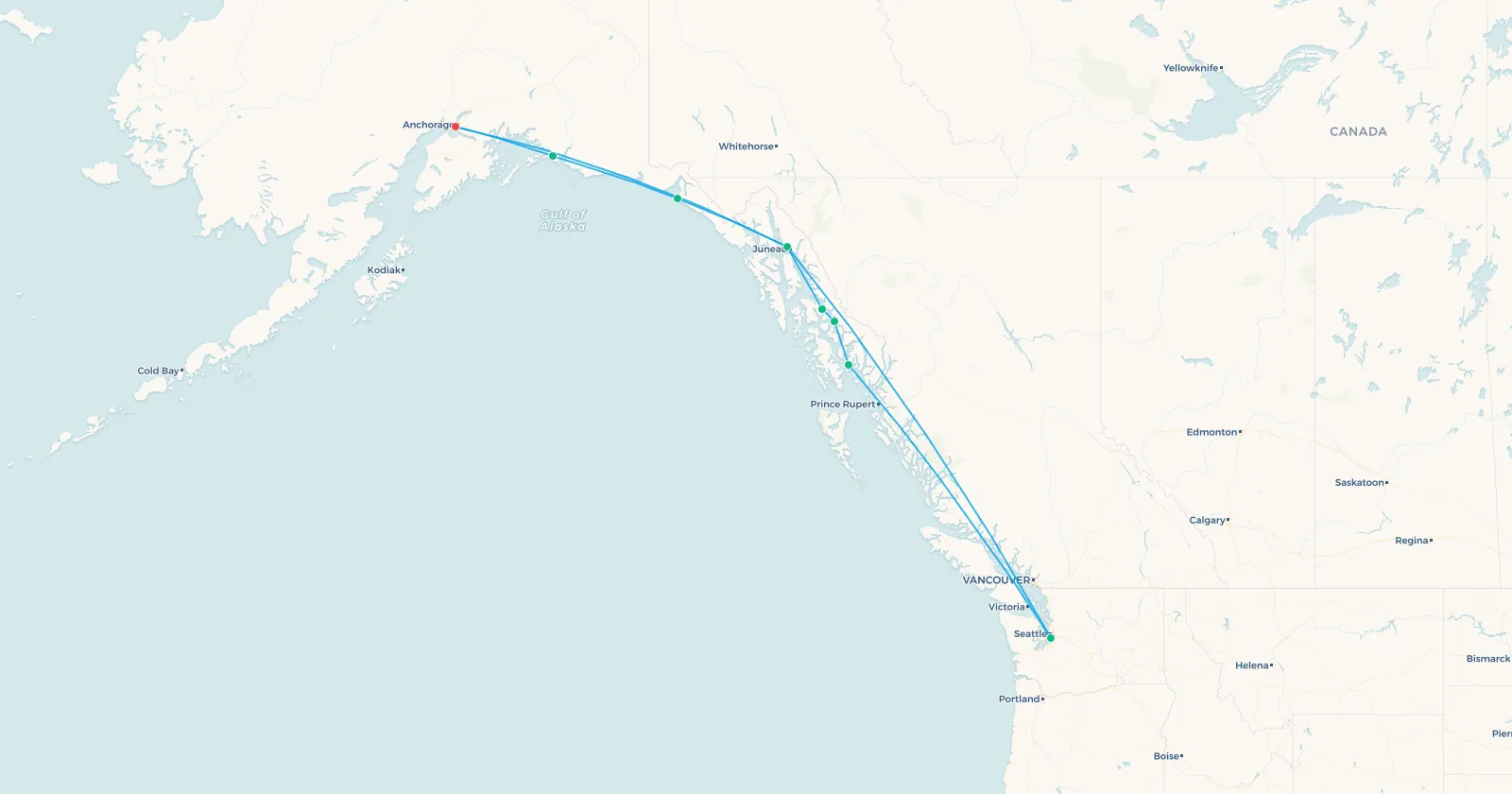
➕ Add these 9 routes to my map | 🗺️ Preview these routes on the map | 📥 CSV
Search flights Seattle → Anchorage Search flights SEA → ANCTwo details make this more than a curiosity. The first is Wrangell to Petersburg , which is about 50 km and among the shortest sectors flown by a mainline Boeing 737 anywhere in the world. The seatbelt sign barely goes off. The second is that this is not a regional turboprop operation dressed up as a jet route: it is the same aircraft type Alaska flies to Los Angeles, stopping at towns of a few thousand people.
The reason is simple and absolute. Juneau is the only state capital in the United States with no road connection to anywhere. Neither do Ketchikan, Wrangell, Petersburg, Yakutat or Cordova. You arrive by air or by sea, and the Alaska Marine Highway ferry takes days. Until 2017 the Milk Run was flown by 737-400 Combis, half the cabin seats and half a cargo hold, because the freight mattered as much as the passengers.
It is also, incidentally, one of the great scenic flights in commercial aviation, threading the Inside Passage at low level between stops. Several of the sectors would sit comfortably in our list of the most scenic flight routes in the world .
Greenland, Where New Runways Are Ending the Milk Run
Greenland has no roads between towns. Not a few, none: every settlement is its own island of infrastructure, and everything moves by air, boat or snow. That produced one of the purest milk run networks anywhere, a chain of hops working up the west coast from the southern fjords to the high Arctic.
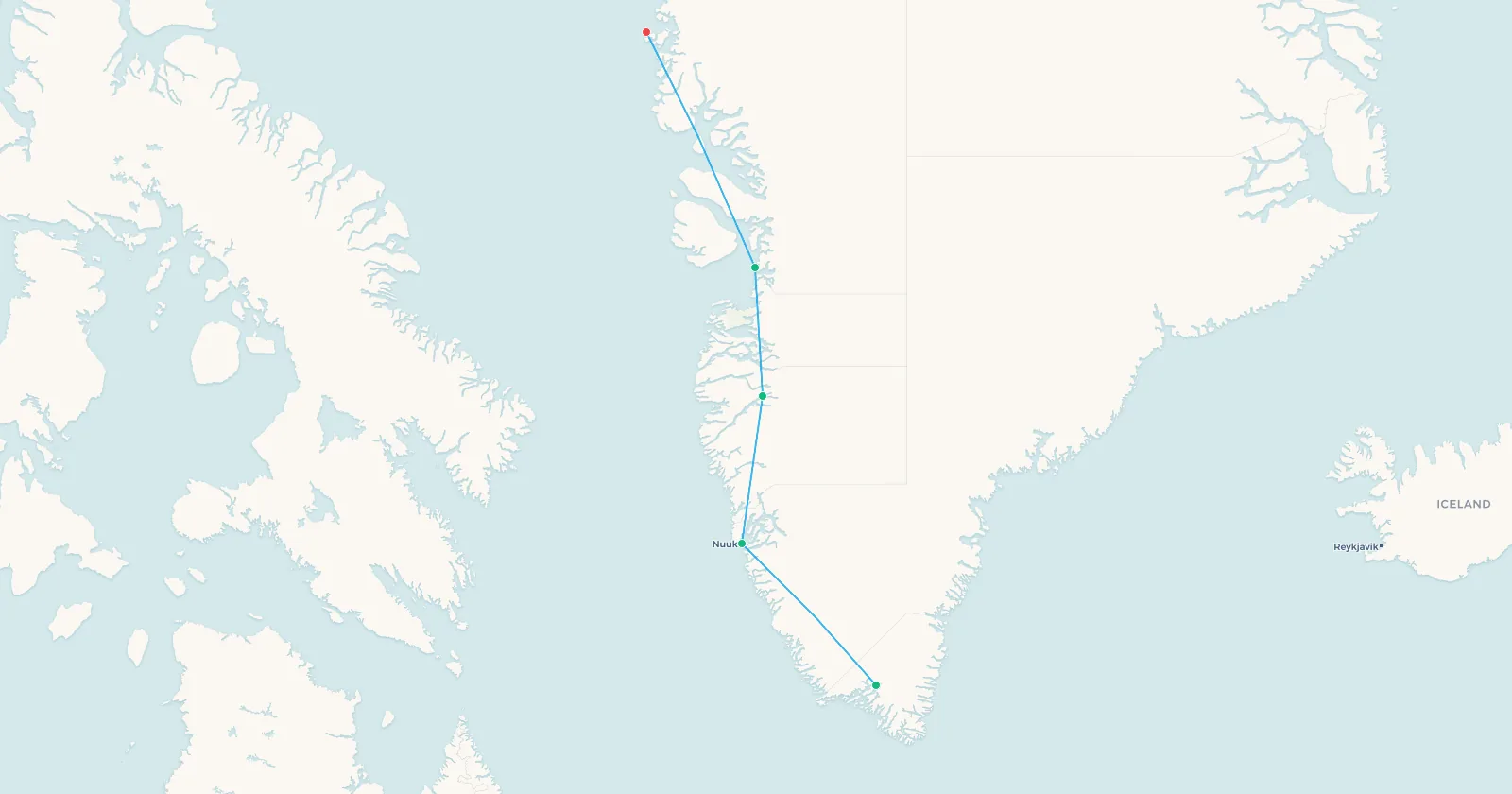
➕ Add these 4 routes to my map | 🗺️ Preview these routes on the map | 📥 CSV
Search flights Copenhagen → Nuuk Search flights CPH → GOHFor decades the hub was Kangerlussuaq , an odd choice for an airline and a perfectly logical one for the American military that built it during the Second World War. It sits at the head of a long fjord, 131 km inland from Sisimiut on the coast and well away from any large town, because that is where the weather and the terrain allowed a long runway. Everyone flying to Greenland landed there first and then took a second, smaller aircraft to wherever they were actually going.
That era is ending. Nuuk's new international airport opened in late 2024 , giving the capital a runway long enough for jets from Denmark. Ilulissat follows on 26 October 2026 , when Air Greenland begins a weekly Copenhagen service from its new airport. Kangerlussuaq keeps a Copenhagen link into late 2026 under an agreement with a tour operator, but the logic that made it the centre of the country's aviation has gone.
This is what usually kills a milk run. Not falling demand, but a runway long enough to skip the stops.
Papua New Guinea, Where There Are No Roads Either
Papua New Guinea has some of the most difficult terrain on Earth and no road between Port Moresby and anywhere else of consequence . The capital is not connected by road to Lae, the second city, or to the Highlands where much of the population lives. Air Niugini serves 23 domestic airports and its subsidiary Link PNG reaches the smaller strips, together carrying roughly half the country's domestic flights.
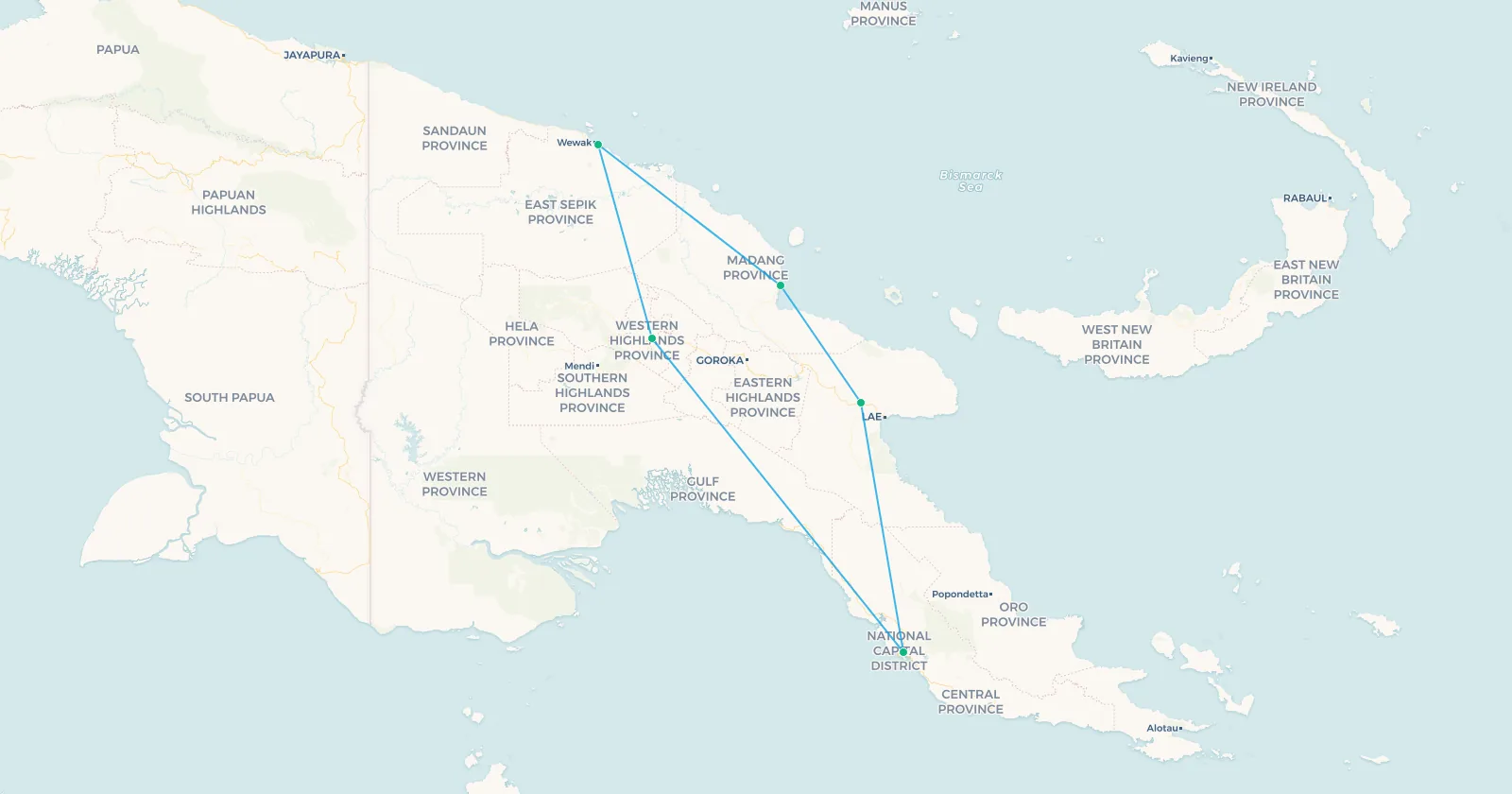
➕ Add these 5 routes to my map | 🗺️ Preview these routes on the map | 📥 CSV
The circuit above runs the north coast and then climbs inland to Mount Hagen at 1,600 metres before returning to Port Moresby. On a map it is a neat loop. On the ground the same journey crosses a mountain range that has swallowed aircraft, and there is no highway alternative to compare it against. This is aviation as basic infrastructure, in the same category as the most isolated airports in the world .
The Loop That Looks Like a Milk Run and Isn't
French Polynesia looks like it should be the best milk run territory on the planet: 118 islands scattered across an area the size of Western Europe, almost all of it water. Air Tahiti serves dozens of them, and the map below draws a tidy triangle from Papeete out through Huahine, Bora Bora and Rangiroa and back.
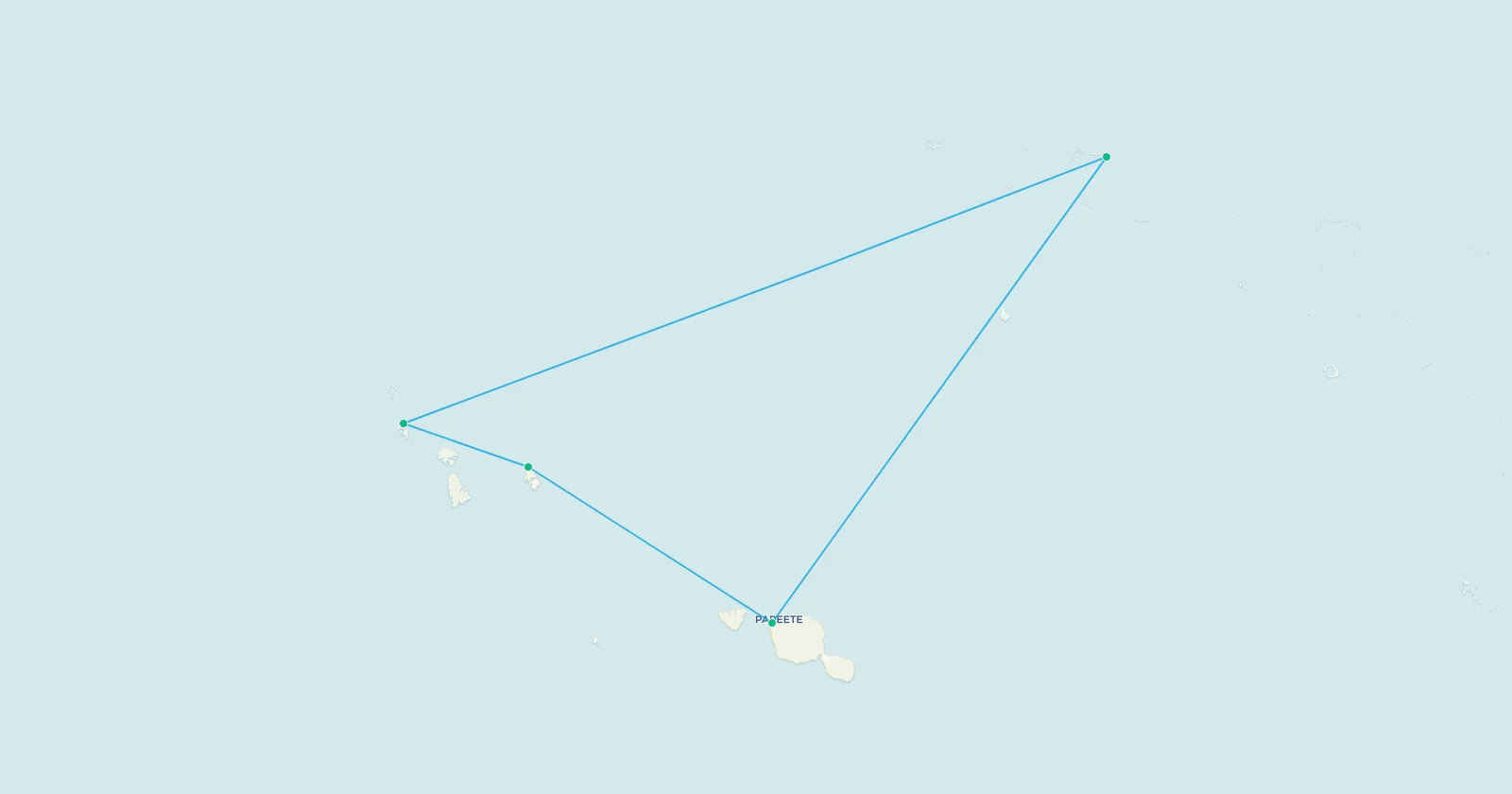
➕ Add these 4 routes to my map | 🗺️ Preview these routes on the map | 📥 CSV
Search flights Papeete → Bora Bora Search flights PPT → BOBExcept that triangle is not one aircraft's day. Air Tahiti is hub and spoke through Papeete : almost every hop connects back through Tahiti rather than running island to island. The loop is something the passenger assembles, using a multi-island air pass that makes three or more islands in one region cheaper than booking each leg separately.
That distinction is worth holding onto, because it is what separates a milk run from an island network. A milk run is one aircraft making many stops . An island network is many aircraft radiating from a hub , and the shape on the map comes from the itinerary rather than the aeroplane. Most of what people call milk runs in the Pacific and the Caribbean are the second kind, and we mapped that pattern properly in our guide to island hopping flights .
Why Milk Runs Exist at All
Stopping is expensive. Every landing burns fuel, adds a cycle to the airframe, costs a landing fee and eats crew duty time. An airline that could serve six towns with six direct flights would do it. Milk runs survive where that arithmetic breaks down.
- The towns are too small to fill an aircraft. Wrangell and Petersburg have a few thousand people each. Neither justifies its own 737 from Seattle, but chained together they justify one between them.
- There is no ground alternative. This is the decisive condition. Where a road exists, the milk run dies, because a bus is always cheaper than a landing cycle. Southeast Alaska, Greenland and the PNG highlands have no road to lose to.
- Freight subsidises passengers. Mail, groceries and medical supplies ride the same aircraft, and in some cases the freight contract is what makes the route viable at all.
- The runway dictates the aircraft. Short gravel or fjord-side strips limit what can land, which limits capacity, which forces the chain.
- Weather makes redundancy valuable. A multi-stop routing gives the crew several usable diversion options on a coast where fog closes airports without much notice.
The corollary is that milk runs are a temporary state. Build a longer runway, as Greenland is doing, and the stops disappear one by one.
Search flights Seattle → Juneau Search flights SEA → JNUEvery Milk Run in This Guide
Four networks in four corners of the world, and almost nothing in between. That emptiness is the point: milk runs only grow where the map has no other lines on it.
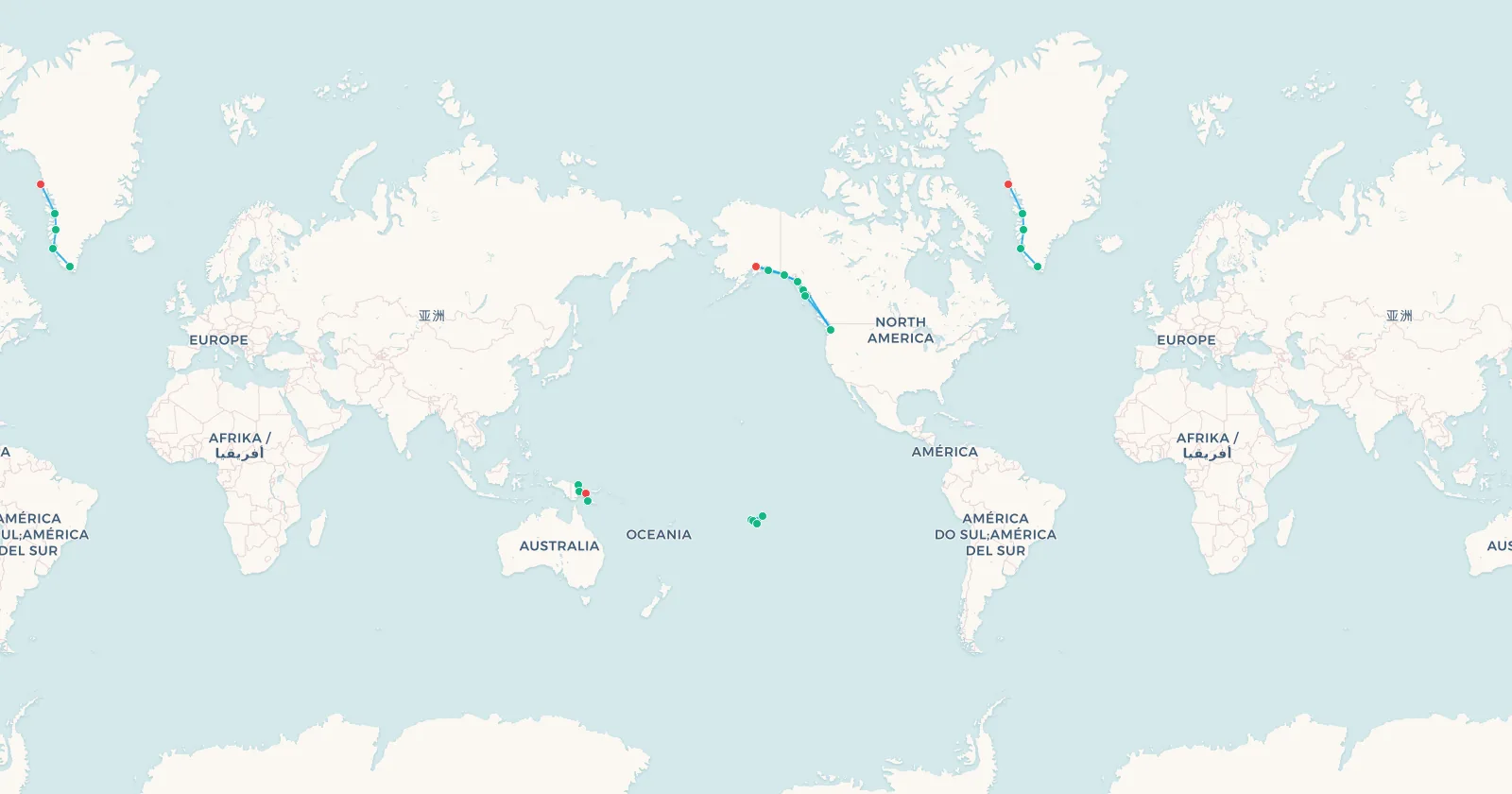
➕ Add these 22 routes to my map | 🗺️ Preview these routes on the map | 📥 CSV
Every CSV here uses the column format the app imports, so you can drop a whole milk run onto your own map and watch the zigzag draw itself. If you want the extreme version of a short hop, the world's weirdest flights includes a scheduled sector that lasts under two minutes.
Frequently Asked Questions
What is a milk run flight?
A scheduled service where one aircraft calls at several small airports in sequence rather than flying point to point, named
after the dairy lorry that stops at every farm. Alaska Airlines' AS65, which stops five times between Seattle and Anchorage,
is the definitive example.
Can you book the Alaska Airlines Milk Run?
Yes. It is ordinary scheduled mainline service sold on Alaska's website like any other flight, on Boeing 737s. Six flight
numbers run milk run routings: 61, 62, 64, 65, 66 and 67.
What is the shortest leg of the Alaska Milk Run?
Wrangell to Petersburg, roughly 50 km, which is among the shortest sectors operated by a mainline Boeing 737 anywhere.
Why do milk run flights exist?
Because the towns they serve have no road connection and are individually too small to fill an aircraft. Chaining them
together makes one viable flight out of several unviable ones, and freight often subsidises the passengers.
Why does Greenland have so many multi-stop flights?
There are no roads between Greenlandic towns at all, so everything moves by air or sea. Kangerlussuaq became the hub because
the American military built a long runway there in the Second World War, far inland from any town.
Is an island hopper the same as a milk run?
Not quite. A milk run is one aircraft making many stops. Most island networks, including Air Tahiti's, are hub and spoke: many
separate flights radiating from a central airport, with the loop assembled by the passenger through an air pass.
Sources
Distances and leg lengths here were computed from the airport database the map itself uses. The rest, and what supports it:
- The six Milk Run flight numbers and their routings: Alaska Airlines' own account of the Milk Run and a route-by-route guide to booking it .
- Greenland's new airports: ch-aviation on the Ilulissat to Copenhagen launch and Air Greenland on Kangerlussuaq's continuing Copenhagen link .
- Papua New Guinea's domestic network: Air Niugini's domestic coverage and its share of the country's flying.
- Air Tahiti's hub and spoke structure and the island passes: Air Tahiti's multi-island pass fares .
Schedules on thin routes change with the season, so confirm current timings with the airline before planning around them.
Milk runs are the last places where flying is still plumbing rather than travel. They are also, quietly, some of the best flights left. Worth putting on a map before the runways get longer.